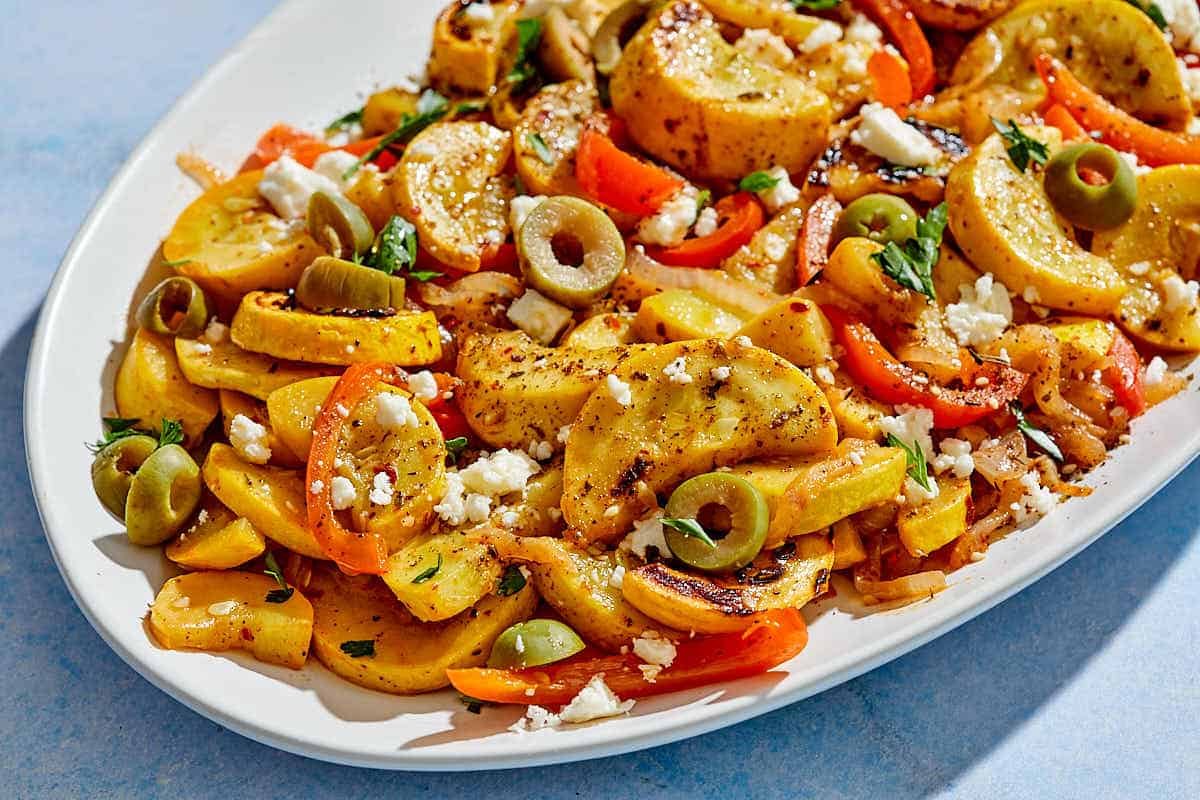

Sautéed yellow squash prepared Mediterranean-style with sweet onions, bell peppers, garlic, and Eastern Mediterranean spices is the summer squash recipe of my dreams—colorful, vegetarian, gluten-free, ready in 25 minutes, and so good!
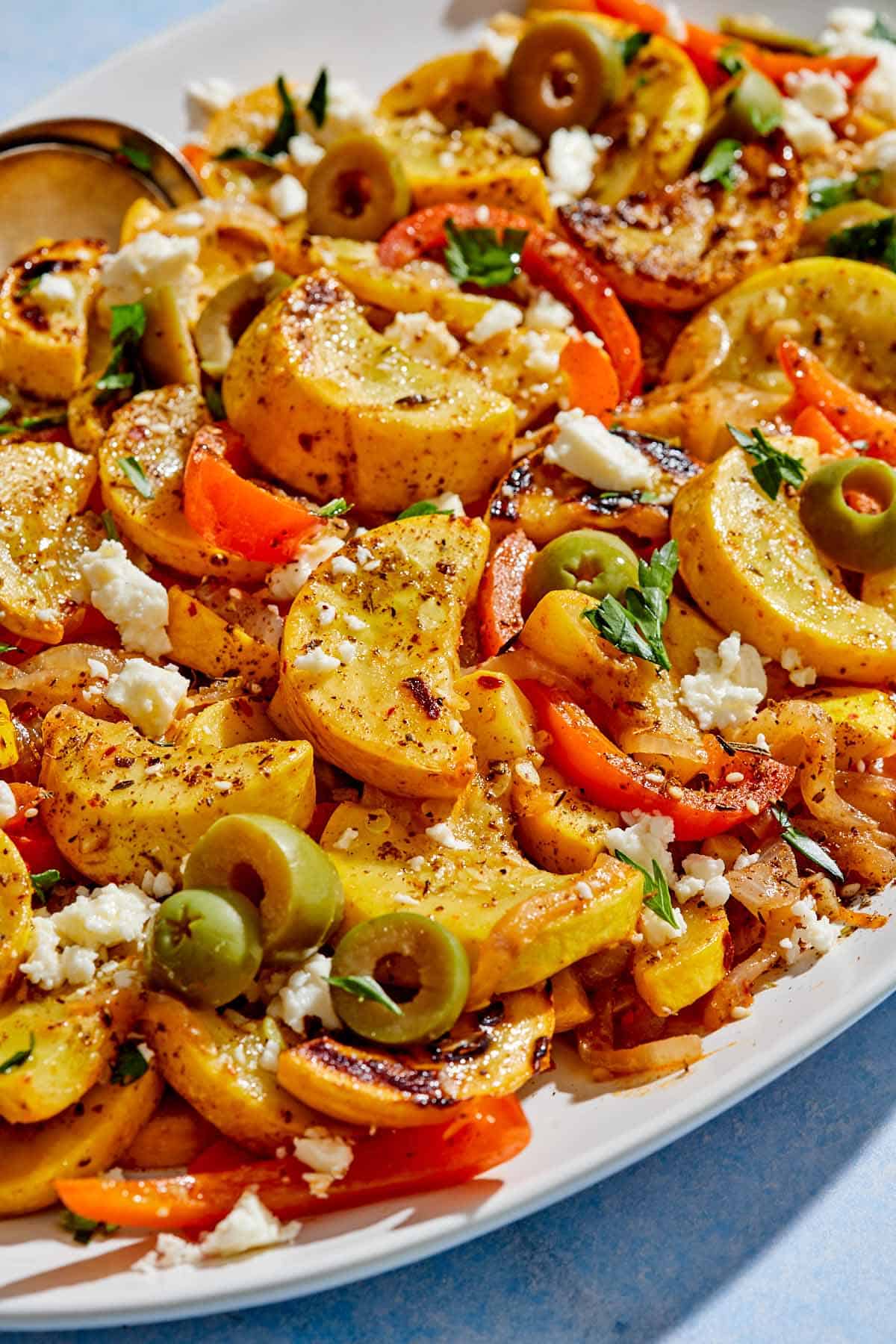
Mediterranean-Style Sautéed Yellow Squash
You can’t find a more affordable, versatile vegetable than yellow squash, also known as summer squash. The tender skin and mild flavor make it an easy backdrop to the Mediterranean flavors I was raised on, and now I’m sharing them with you.
We use summer squash a lot in Mediterranean recipes (both zucchini and yellow squash), so I think it’s fair to say I have a few favorite ways to make this unassuming vegetable become the star of your summer soirée.
Say goodbye to basic sautéed yellow squash, and hello to a summer squash recipe sautéed over high heat for a little char, then dressed in olive oil, feta, olives, and spices like za’atar, cumin, and Aleppo pepper.
If you’ve been looking for a summer side dish that keeps people coming back for more, this recipe checks all the boxes. It’s vegetarian (can be vegan if you skip the feta) and gluten-free. It’s ready in only 25 minutes and goes with all the summer favorites like Juicy Chicken Burgers, Pork Souvlaki, or Watermelon Salad for something sweet.
Sautéed Yellow Squash Ingredients
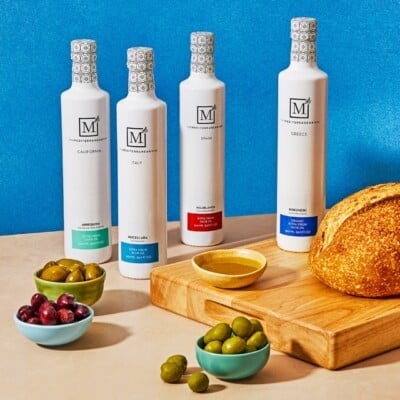
- Extra virgin olive oil: Quality olive oil makes all the difference. It adds depth to your recipes and flavor. If you like more buttery flavors, try Italian Nocellara, or if peppery is more your style, try Spanish Hojiblanca.
- Sweet onion or a basic yellow onion will both work in this recipe.
- Garlic: I like a garlicky kick, so I use 3 cloves, but if you want to use less (or more), go ahead.
- Yellow squash is the star of this recipe. It’s mild, easy to work with, and cooks quickly. If you can’t find yellow squash, zucchini will work just as well in this summer squash recipe.
- Red Bell Pepper adds a touch of sweetness and a pop of color. Feel free to use yellow or orange bell peppers if you can’t find red. Just stay away from green. It’s too bitter for this recipe.
- Seasonings: Kosher salt, black pepper, and cumin are pretty self-explanatory, but za’atar and Aleppo pepper might be unfamiliar. Aleppo pepper is a complex, mild, and fruity spice. It has less heat than crushed red pepper flakes and a varied flavor profile. Za’atar is a Middle Eastern spice blend that lends a nutty, herbal quality to the dish. They are available in our shop or at Middle Eastern grocery stores. However, if you don’t have them, you can still make this recipe, and it will be delicious.
- Feta: I prefer using block feta in the brine. It’s creamier than pre-crumbled feta, but use what you have.
- Olives: I love, love, love buttery green Castelvetrano olives. They just go so well with this recipe, but you could also use Kalamata or Spanish olives. All would work.
- Parsley: I wouldn’t be Mediterranean if I didn’t use fresh herbs in my recipes! A handful of minced parsley tossed in at the end brightens the dish and adds another pop of color. Basil or even fresh dill would also taste delicious.
How to Make Sautéed Yellow Squash
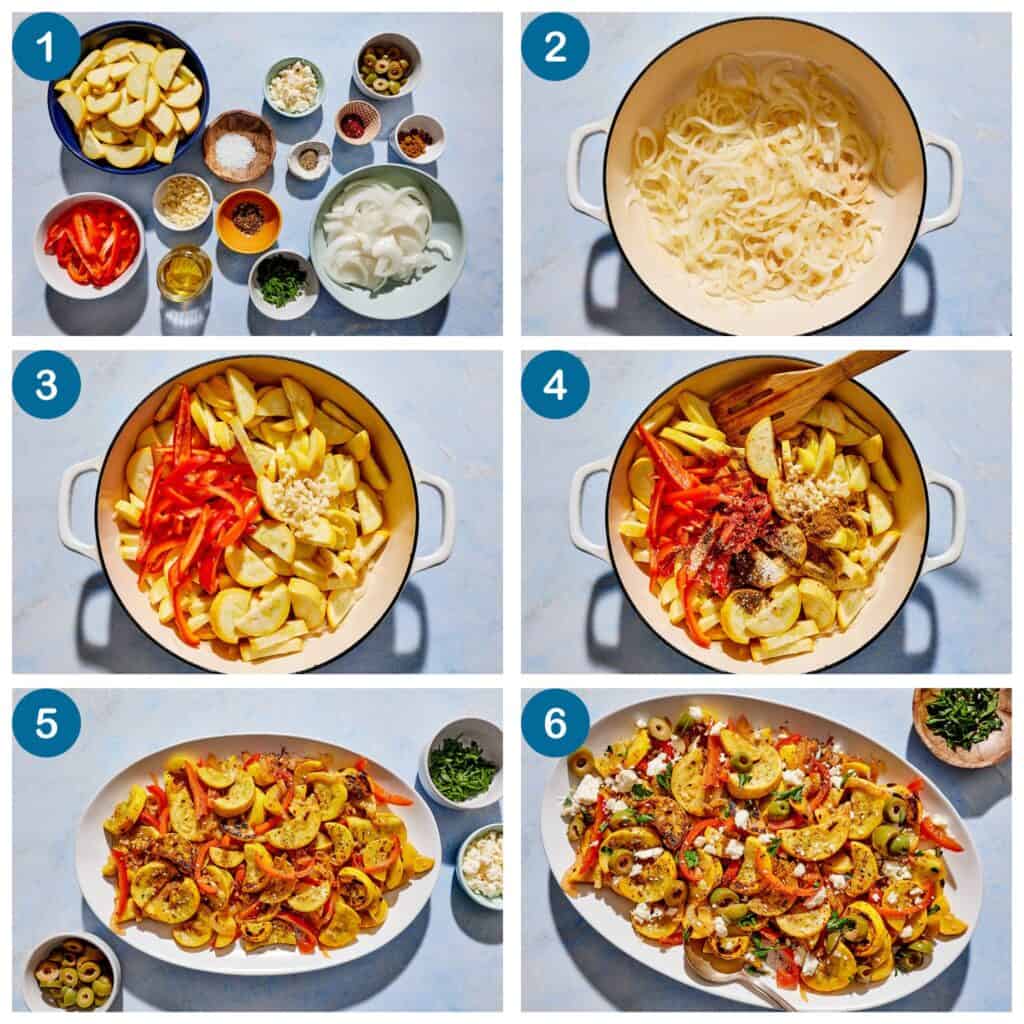
Personally, I like my yellow squash on the tender side and a little caramelized, if you will, but still maintain a bit of a bite. So, I may turn up the heat for a portion of the time to get some of that color on.
- Cook the onions. Heat 2 tablespoons of extra virgin olive oil over medium heat until shimmering but not smoking. Add sweet onions and cook for about 4 minutes until translucent. To add color, raise the heat to medium-high while continuously stirring the onions.
- Add the vegetables: Add garlic, yellow squash, and red bell peppers. Drizzle a little more extra virgin olive oil, about 1 tablespoon.
- Season and cook: Season with salt, pepper, za’atar, Aleppo pepper, and cumin. Stir with a spoon to make sure the vegetables are well coated with the spices. Cook on medium-high, stirring occasionally, until squash and peppers are nice and tender (I like my squash to have some caramelized parts, which is why I cook it over medium-high; you can go with medium if you don’t like the caramelization).
- Serve: Transfer to a serving platter. Drizzle with extra virgin olive oil and a generous pinch of za’atar. If you like, add a sprinkle of crumbled feta cheese, pitted olives, and a handful of chopped fresh herbs like parsley. Enjoy!
What to Look for When Buying Yellow Squash
Both yellow squash and zucchini are available pretty much year-round here in the USA, but they shine most during the warmer months.
- Opt for small to medium-sized yellow squash over larger options. They will offer prime texture and flavor — thin, crisp skin and tender, mildly sweet and nutty flesh. Large, more mature yellow squash will have larger seeds and watery flesh.
- Summer squash, both zucchini and yellow squash, have thin, tender skin. They are easily pierced and bruised. Make sure you inspect them well before buying and steer clear of any with cuts or divots.
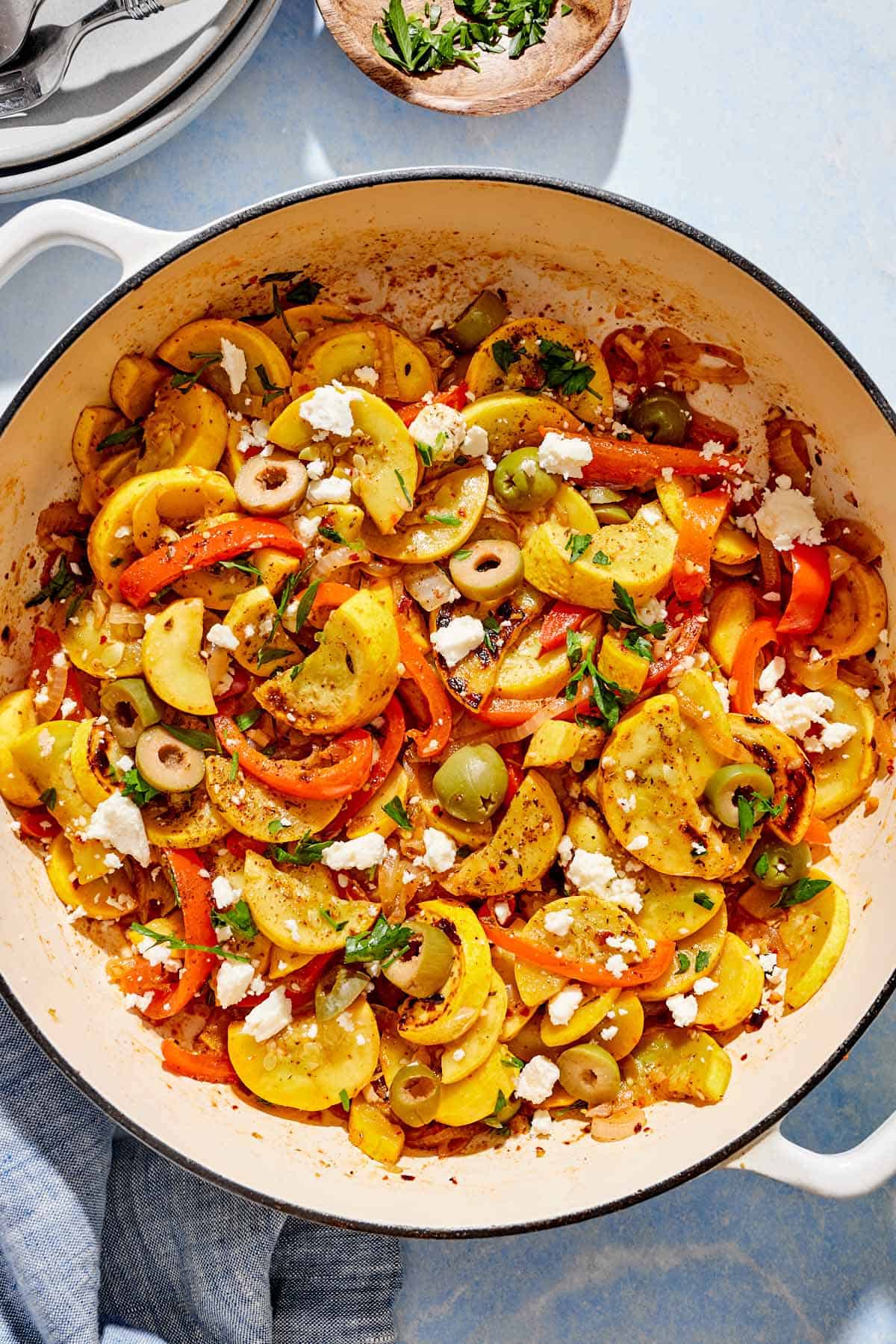
Recipe Variations
This summer squash recipe is super forgiving and is meant to be tailored to your taste, so feel free to play around in your kitchen with what you have on hand.
- Mix things up and use a combination of yellow squash and zucchini.
- Swap the yellow squash entirely for zucchini if that’s what you have available.
- Try a different combination of spices. For example, go the Italian route with a little dried oregano and thyme. Or try a sprinkle of Ras El Hanout for a Moroccan twist.
- Add a handful of grape tomatoes for some acidity.
- Leave out the feta to make it vegan and dairy-free.
More Summer Squash Recipes
In the Mediterranean, we cook with squash all the time. You’ll find it in Turkish side dishes and French casseroles, Greek roasted vegetables, and more. Explore the Mediterranean with some of my favorite summer squash recipes, including:
-
Cook the onions. Heat 2 tablespoons of extra virgin olive oil over medium heat until shimmering but not smoking. Add sweet onions and cook for about 4 minutes until translucent. To add color, raise the heat to medium-high while continuously stirring the onions.
-
Add the vegetables: Add garlic, yellow squash, and red bell peppers. Drizzle a little more extra virgin olive oil, about 1 tablespoon.
-
Season and cook: Season with salt, pepper, za’atar, Aleppo pepper, and cumin. Stir with a spoon to make sure the vegetables are well coated with the spices. Cook on medium-high, stirring occasionally, until squash and peppers are nice and tender (I like my squash to have some carmelized parts, which is why I cook it over medium-high; you can go with medium if you don’t like the carmeliztiaon.
-
Serve: Transfer to a serving platter. Drizzle with extra virgin olive oil and a generous pinch of za’atar. If you like, add a sprinkle of crumbled feta cheese, pitted olives, and a handful of chopped fresh herbs like parsley. Enjoy!
- Cook’s Tip: Cooking time will vary depending on how tender you like your squash. Personally, I like to get a little caramalization/char on my yellow squash, so, I turn up the heat for a short while to accomplish that while maintaining some bite to the squash.
- Recipe Variations: This is a super forgiving recipe and is meant to be tailored to your taste. You can mix things up and use a combination of yellow squash and zucchini. Or try a different combination of spices. For example, go the Italian route with a little dried oregano and fresh thyme.
- Serve it next to your favorite protein such as Mediterranean lemon chicken; baked fish; fish gyros; or kofta kabobs!
- Visit The Mediterranean Dish online store for our Greek extra virgin olive oils (from organically grown and processed Koroneiki olives), and browse our selection of all-natural and organic spices, including Za’atar, Aleppo Pepper, and Cumin.
Calories: 169.5kcalCarbohydrates: 12.9gProtein: 5.3gFat: 12.3gSaturated Fat: 2.3gPolyunsaturated Fat: 1.4gMonounsaturated Fat: 7.8gCholesterol: 5mgSodium: 97.4mgPotassium: 641.6mgFiber: 3.6gSugar: 7.1gVitamin A: 1449.7IUVitamin C: 74.3mgCalcium: 51.4mgIron: 1.6mg
Bundle and Save!
Four of our best-selling signature olive oils, perfect for everyday use.