
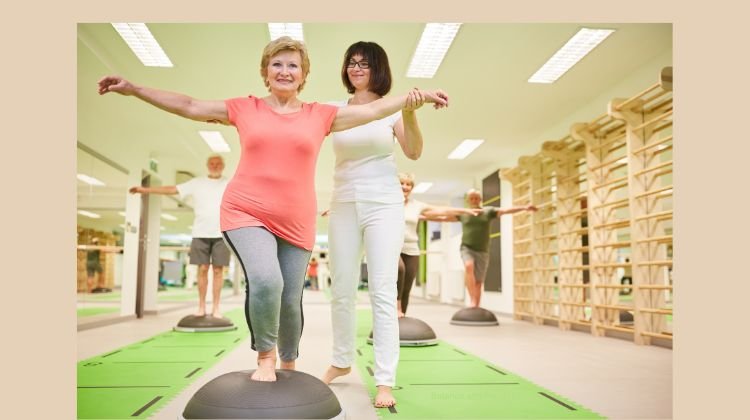
I’ve noticed that as I’ve gotten older, my balance and flexibility have diminished somewhat. Part of the reason is that my knees are getting a little more creaky. However, I’ve found that practicing exercises to improve my stability helps me immensely. The last thing we want to do is fall as we get older, and I believe it should be the number one element in our fitness routine for women over 50.
Staying active as we age is all about moving with confidence, comfort, and strength. But even the most dedicated walkers, swimmers, or gym-goers often overlook two critical pieces of the healthy-aging puzzle: balance and flexibility. Our muscle’s elasticity naturally decreases, joints stiffen, and the reflexes we rely on to catch ourselves slow down. That combination can lead to instability, discomfort, and, most importantly, a higher risk of falls.
The good news is that balance and flexibility are incredibly trainable, even if you’ve never worked on them before. A few simple daily or weekly habits can improve posture, core strength, mobility, and coordination — all of which help you stay active and independent for years to come.
What causes balance and flexibility to decline?
Several natural physiological changes happen as women move into their 50s, 60s, and beyond:
- Declines in muscle mass that affect stability
- Reduced joint lubrication
- Shortening or tightening of connective tissues
- Postural changes and weaker core muscles
- Slower reaction times
Many women don’t notice these shifts until a stumble or a twinge of pain reminds them that things don’t feel the way they used to. That’s why incorporating intentional balance and flexibility work early — and consistently, and maintaining an active lifestyle — is essential.
The benefits of improving balance and flexibility
Building these skills doesn’t just help prevent falls, it also supports:
- Better posture and less back pain
- Easier household and daily activities
- Improved gait and stride confidence
- Stronger, more stable joints
- Greater mobility for travel, sports, and hobbies
- A calmer mind, since many balance exercises encourage mindful breathing
Think of this type of training as an investment in your future ability to move gracefully, safely, and joyfully.
Five safe and effective exercises for women over 50
Below are five gentle exercises suitable for most older women. Of course, anyone with medical concerns or mobility challenges should always consult their healthcare professional before starting a new physical activity.
1. Standing heel-to-toe walk
This exercise improves balance and coordination.
How to do it:
Walk in a straight line, placing your heel directly in front of the toes on your opposite foot, as if walking on a tightrope. Take 15–20 slow, controlled steps.
2. Single-leg stand (with support)

Great for stability and strengthening the ankles, hips, and core.
How to do it:
Stand behind a chair and hold on lightly. Lift one foot a few inches off the ground and hold for 10–20 seconds. Switch sides. Repeat 3–5 times. If you can do this without holding the chair, even better, but have the chair on hand just in case.
3. Seated hamstring stretch

A gentle stretch that improves flexibility in the back of the legs and reduces lower-back tension.
How to do it:
Sit on a chair, extend one leg forward with your heel on the floor, and hinge slightly from the hips until you feel a stretch. Hold for 20–30 seconds. Switch sides.
4. Cat-cow stretch

Ideal for spinal mobility and stiffness relief.
How to do it:
From hands and knees, alternate arching your back upward (cat) and then dipping it low while lifting your chest and tailbone (cow). Move slowly for 8–10 cycles. This exercise is excellent for stretching out your back muscles, especially if you sit for long periods during the day.
5. Side leg lifts

Helps strengthen the hips and improve lateral stability, which is important for preventing falls. Many knee issues stem from having weak hip muscles. Working them in an exercise like this will lessen the pain that could cause a fall.
How to do it:
Stand near a wall or chair. Lift one leg out to the side, keeping your torso straight. Lower slowly. Do 10–15 repetitions on each side. You can also do this lying on a bed. I like to use resistance bands when I do this. Start with light ones and work up to stiffer bands.
Tips for making balance and flexibility a habit
- Aim for just 10–15 minutes a day
- Add movements to your morning or evening routine
- Practice near a wall or sturdy chair for safety
- Wear supportive shoes when needed
- Move slowly — momentum is the enemy of balance
The key is consistency, not intensity.
Why you should start stability exercises now
Aging doesn’t mean slowing down — it means moving smart. With regular balance and flexibility training, you can stay active, mobile, and confident well into your 70s, 80s, and beyond. These small daily habits support independence, protect your joints, and help your body feel good in motion.