
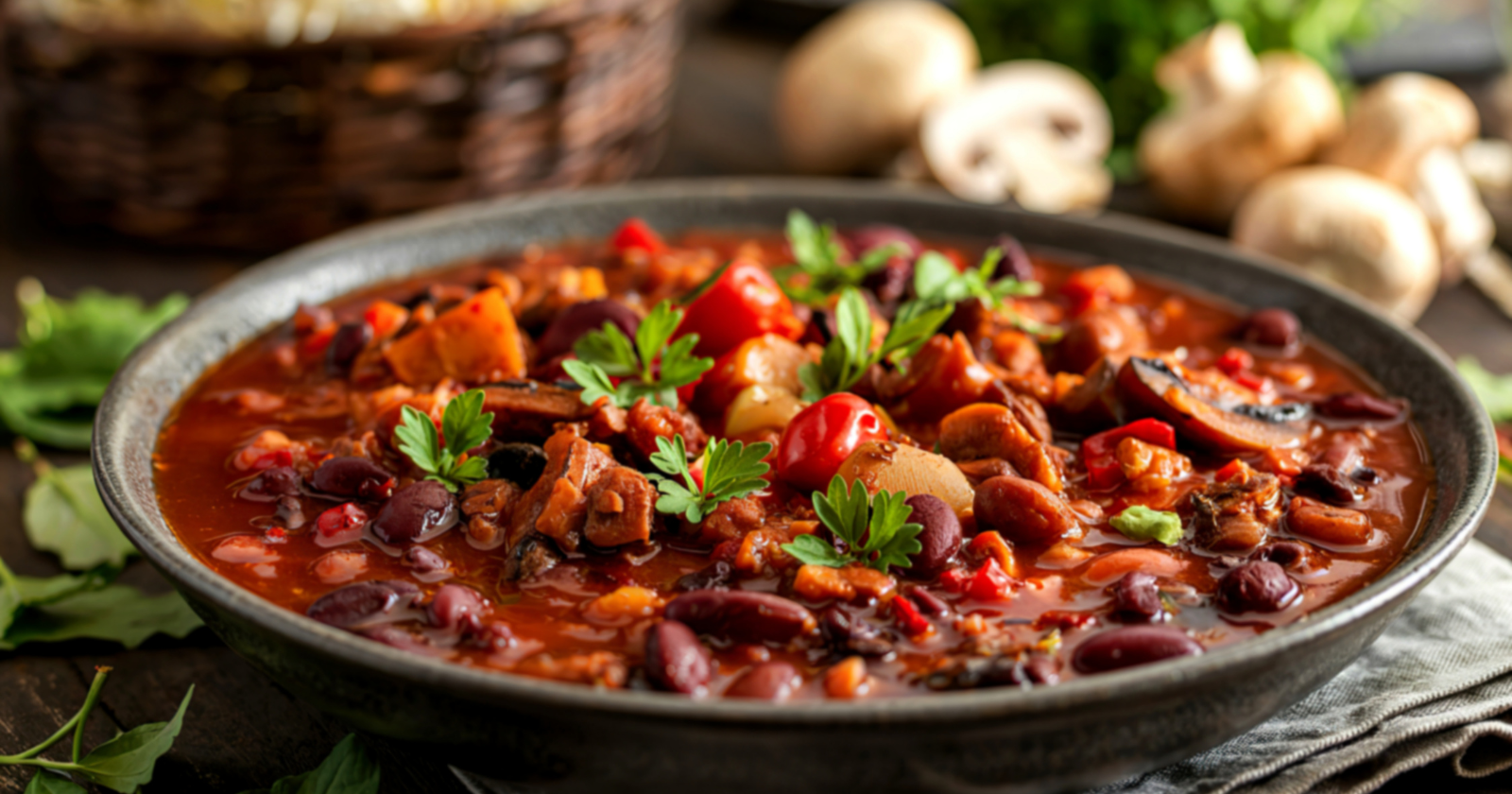
You know that moment when you’re staring into your pantry at 6 PM, exhausted from the day, and the thought of cooking anything remotely healthy feels like climbing Mount Everest? Now imagine pulling together a hearty, warming chilli that tastes like you’ve been simmering it all afternoon, except it only took you half an hour and one pot to wash up after.
This chilli changed how I think about weeknight cooking. It’s become my secret weapon for those nights when I want something satisfying without the fuss. The kind of meal that makes you feel accomplished rather than depleted.
Why this chilli works when nothing else will
Most vegetarian chilli recipes treat you like you’ve got all day to caramelize onions and individually toast spices. This one respects your time and your intelligence. It uses a few clever shortcuts that amplify flavor without adding steps.
The magic happens through layering umami-rich ingredients that most of us already stock. Soy sauce, tomato paste, and a touch of cocoa powder create depth that usually takes hours of slow cooking. I learned this trick from a chef who could make any vegetable taste like it had been cooking since dawn, even though I watched them start from scratch.
The texture comes from a mix of beans and lentils. Red lentils break down slightly, creating a thick, hearty base, while kidney beans and black beans stay intact for substance. No weird meat substitutes, no apologizing for what’s missing. Just real food that stands on its own merit.
The ingredients you definitely have
Check your kitchen right now. I bet you have at least 80% of what you need. Here’s what makes the base: canned beans (whatever varieties you’ve got), canned tomatoes, an onion, garlic, and basic spices like cumin and chili powder. That’s your foundation sorted.
The game-changers hide in plain sight. That half-empty jar of tomato paste? Essential. The soy sauce relegated to takeout nights? It’s going in. Dark chocolate or cocoa powder from your last baking adventure? Just a square or a tablespoon transforms everything.
For vegetables, work with what you have. Bell peppers are classic, but I’ve made killer versions with zucchini, carrots, sweet potatoes, even leftover roasted cauliflower. The philosophy here mirrors what I apply to most challenges: start with what you’ve got, not what you wish you had.
The 30-minute method that actually works
Start with a large pot over medium-high heat. Add oil, then your diced onion. While that’s cooking, chop your other vegetables. No need for perfection. Rustic chunks cook faster and give better texture anyway.
After five minutes, add garlic, spices, and tomato paste. Stir for thirty seconds until fragrant. This blooming technique wakes up the spices without requiring separate toasting. Add your harder vegetables now if using any.
Pour in the canned tomatoes, crushing them with your spoon as they hit the heat. Add your beans, lentils if using, and liquid. Bring to a boil, then simmer. The high initial heat jumpstarts the cooking process, cutting your simmer time dramatically.
Here’s where patience becomes your friend, though not much is required. Let it bubble away for 20 minutes, stirring occasionally. Use this time to make rice, warm tortillas, or just sit at your kitchen counter with a cup of tea. I’ve found these small pockets of waiting to be surprisingly meditative.
Season aggressively at the end. Salt, pepper, maybe a squeeze of lime. Taste and adjust. Trust your palate over any recipe.
Making it your own without overthinking
Once you’ve made this chilli twice, you’ll stop needing measurements. That’s the goal. Cooking becomes truly enjoyable when you stop treating recipes like instruction manuals and start treating them like suggestions.
Want it spicier? Add fresh chilies with the onions or a dash of hot sauce at the end. Prefer it sweeter? A tablespoon of maple syrup balances the acidity beautifully. Missing that meaty texture? Roughly mashed chickpeas or crumbled tempeh work brilliantly.
I serve mine differently depending on my mood. Sometimes over rice for a complete protein. Sometimes with crusty bread for pure comfort. Sometimes straight from the pot, standing at the stove after a long walk, appreciating the simple pleasure of good food made quickly.
The toppings transform it into something special without extra cooking. Avocado, Greek yogurt, sharp cheddar, crushed tortilla chips, fresh cilantro. Pick two or three. Let everyone customize their bowl.
Why quick cooking can be mindful cooking
There’s this myth that mindful cooking requires hours of contemplative chopping and stirring. But I’ve found the opposite to be true. When you’re working efficiently, with purpose and presence, even quick cooking becomes a practice.
The focused thirty minutes I spend making this chilli often feel more centering than elaborate weekend cooking projects. There’s something powerful about taking raw ingredients and transforming them into nourishment without the day-long commitment. It proves that taking care of yourself doesn’t have to be complicated.
Each step has a purpose. Each ingredient adds something essential. Nothing is wasted, including your time. This kind of intentional simplicity extends beyond the kitchen. It’s about recognizing that the best solutions often aren’t the most complex ones.
The ripple effect of one good pot of chilli
This chilli keeps improving for three days in the fridge and freezes beautifully for three months. Make a double batch on Sunday, and you’ve got lunch sorted for the week. Future you will be grateful.
But beyond the practical benefits, mastering one simple, reliable recipe changes how you approach cooking. It builds confidence. Suddenly, throwing together dinner isn’t daunting. You stop defaulting to takeout. You start experimenting more because you know you have this fallback.
You might have read my post on building sustainable habits through small wins. This chilli embodies that principle perfectly. It’s achievable enough to make regularly but satisfying enough to feel like an accomplishment.
Start tonight
Don’t wait for the perfect moment or the perfect ingredients. Tonight, after you finish reading this, check your pantry. Pull out those cans of beans. Find that onion. Locate your spices.
The best part about this chilli isn’t just that it’s quick or easy or uses what you have. It’s that making it proves something important: you can create something genuinely good without overthinking, overcomplicating, or overwhelming yourself.
That’s a lesson worth learning, whether we’re talking about cooking, work, or life in general. Sometimes the best solution is the simplest one, executed with confidence and care.
So make the chilli. Make it messy. Make it yours. Let it bubble away while you decompress from your day. Serve it in your favorite bowl. Appreciate what you’ve created in just thirty minutes with just one pot.
Then do it again next week, but better, because now you know you can.