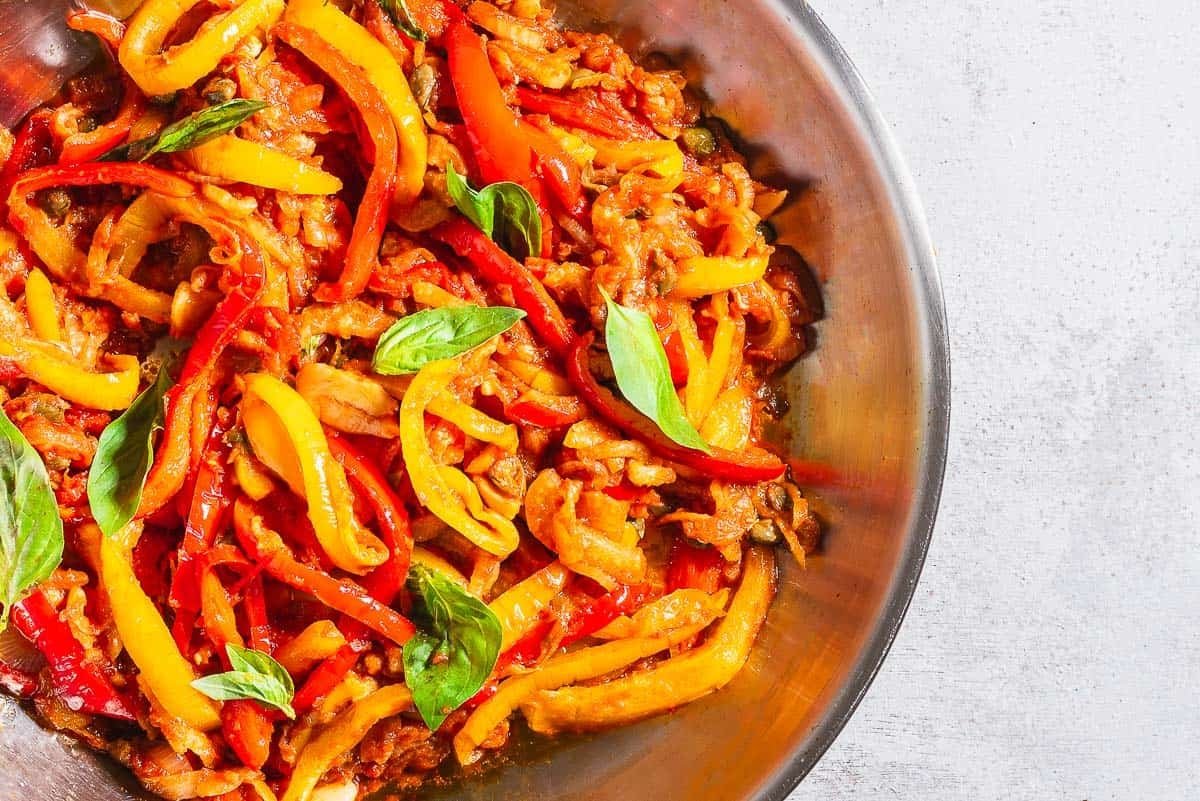


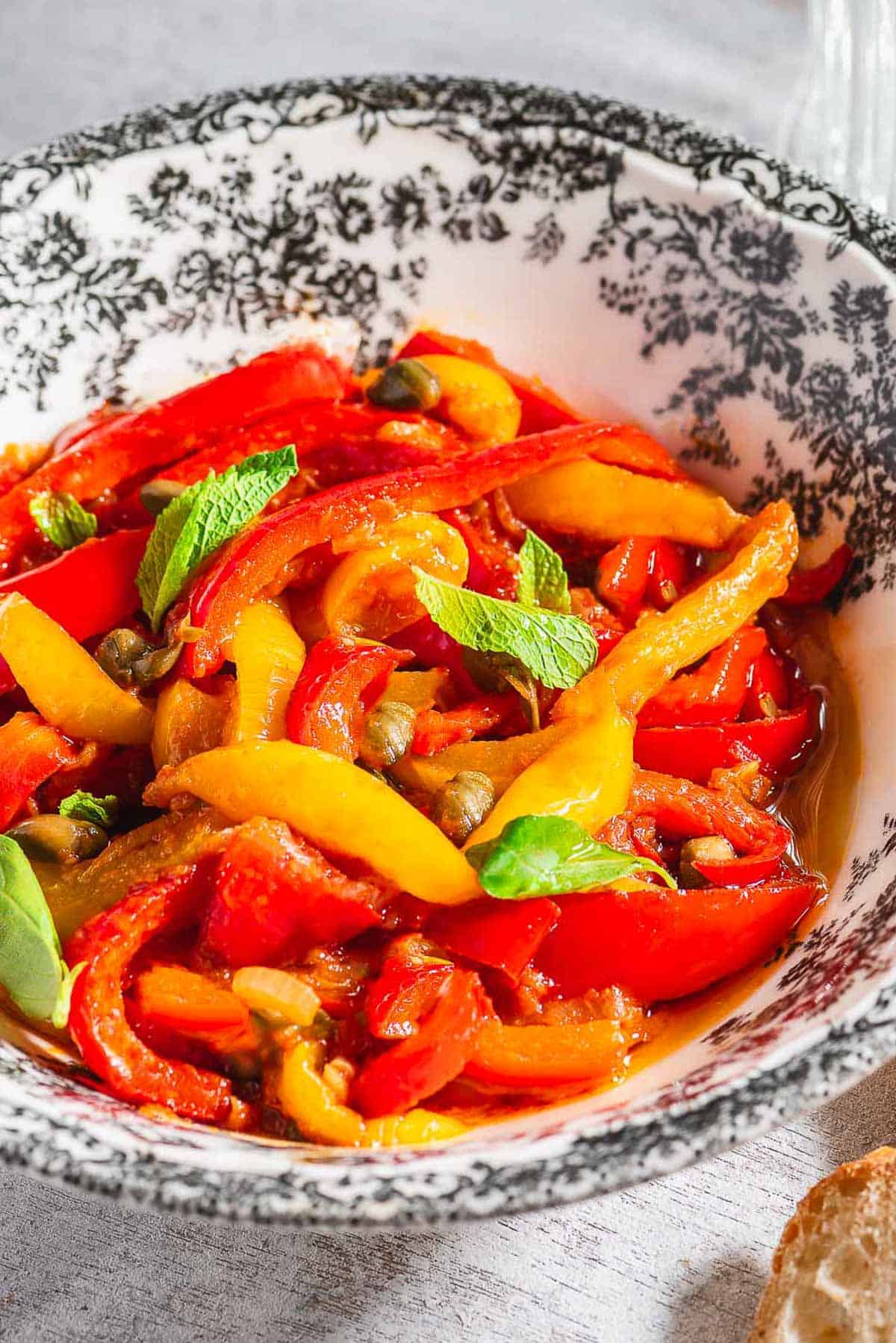
Peperonata is a silky stew of peppers, onions, and tomatoes loaded with assertive Italian flavor. It comes together in about 30 minutes, making a great side dish for everything from a fancy roast to a simple frittata. You can even toss it with pasta and call it dinner!
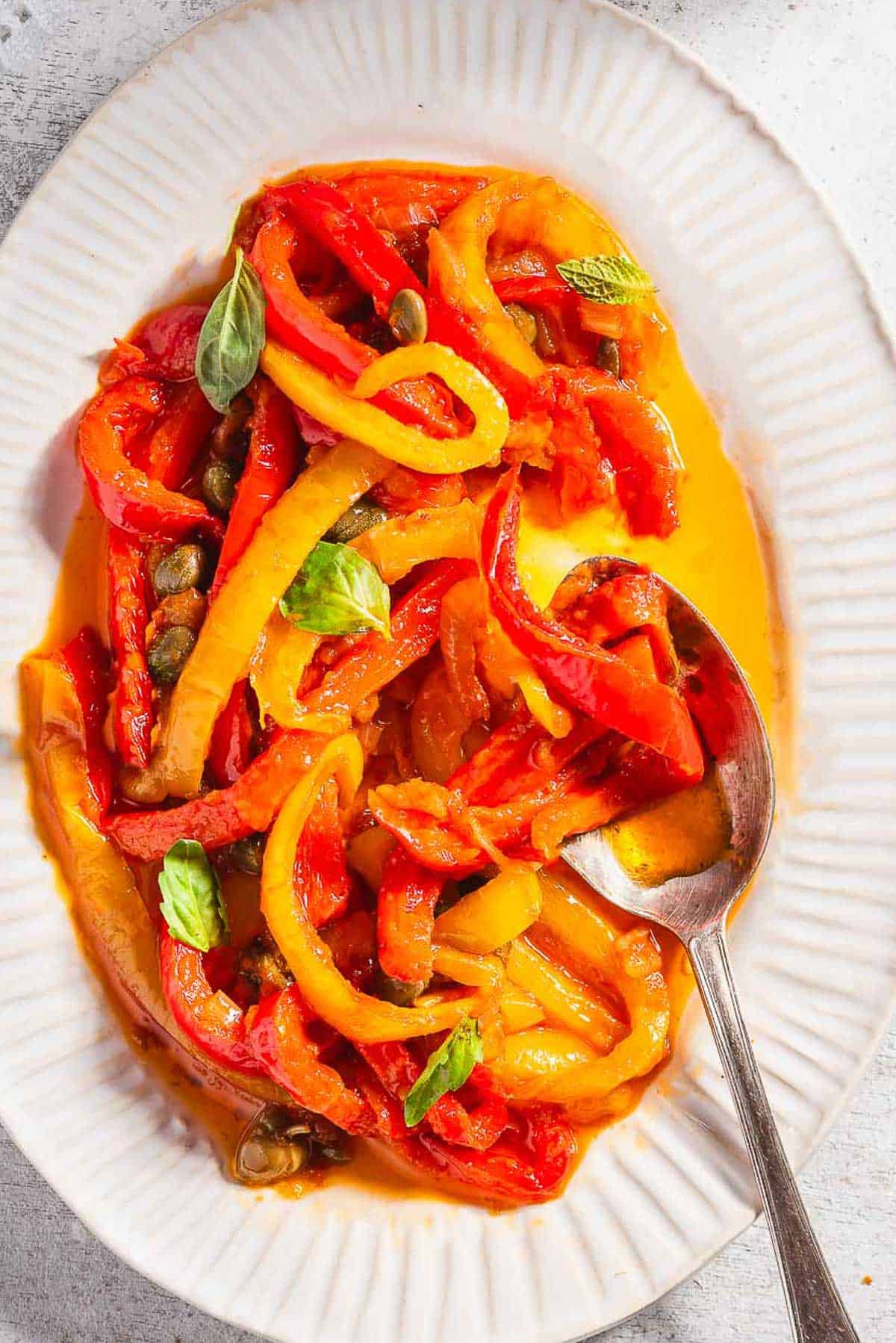
My Family Peperonata Recipe
Peppers—the true star of this simple but luxurious Peperonata recipe—may be a New World vegetable, but to me they are quintessentially Italian. They feature prominently in the cuisine of southern Italy, including Calabria, Puglia, and Abruzzo, where my family is from. I love walking by a trattoria at lunchtime, hearing the clatter of plates and silverware, and catching the pungent perfume of peppers in the breeze.
This is a fairly traditional recipe, with the (optional) addition of fennel for added sweetness and texture. What I love best is how versatile Peperonata is. Scoop onto bruschetta or toss it with pasta. It’s a perfect partner for roasts of any kind, or for grilled fish or steak. Enjoy it as a pizza topping, or stir it into scrambled eggs. Just to name a few ideas!
Plus, peperonata keeps well in the fridge, and its flavor improves as it sits. Make it ahead of time—you’ll thank yourself later!
Why You’ll Love This Recipe
- Peak-season peppers, one pan, minimal effort—maximum flavor!
- Slow braise is the technique, but EVOO does the heavy lifting.
- Endlessly versatile—serve as a side, a sauce, a bruschetta topping or fold into eggs.
What is in Peperonata?
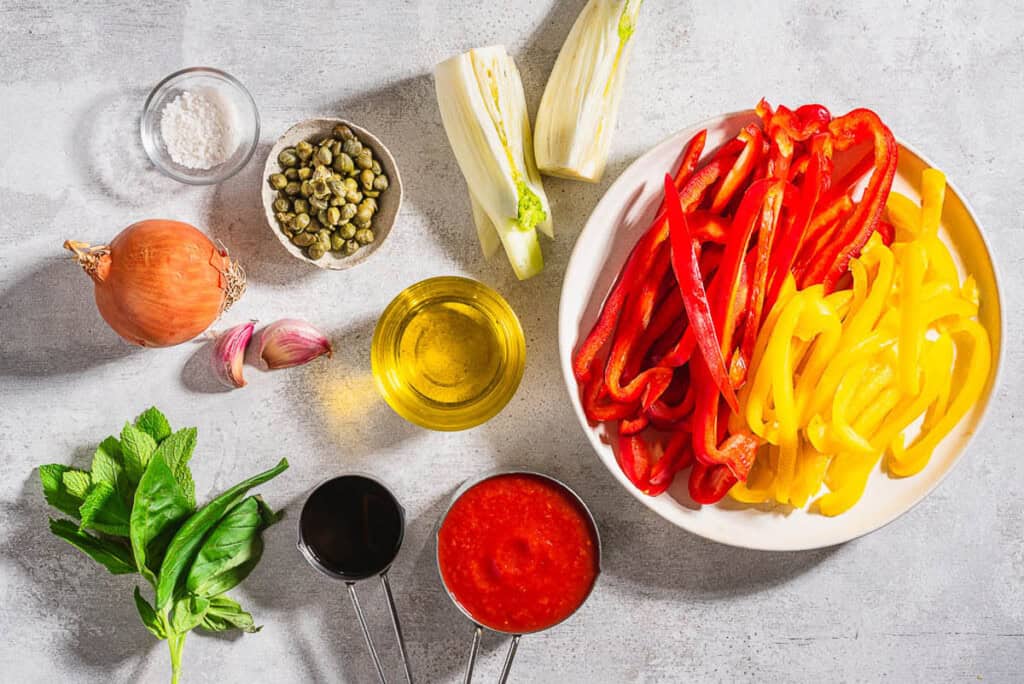
While sweet peppers are the star of this show, there are a few crucial supporting roles as well. Here’s what you need to make this peperonata recipe:
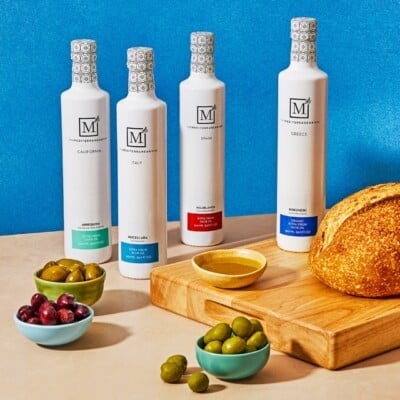
- Extra virgin olive oil: Stewing the peppers in olive oil mellows their assertiveness and coaxes out their sweetness. Be sure to use a good quality medium-bodied oil, such as our Nocellara.
- Yellow onion and garlic enhance the sweet and savory flavor of peperonata.
- Fennel: This crunchy anise-flavored vegetable isn’t traditional in peperonata, but it provides texture and an appealing sweetness, so I almost always include it (same goes for my Lentil Potato Soup–I just can’t resist adding fennel!) I like to cut the fennel bulb into medium dice, but you can slice it thinly if you prefer.
- Sweet peppers: You can stick with classic red bell peppers or add some color by including yellow and orange in the mix. The most important detail is to make sure the peppers are ripe rather than watery. They should feel heavy for their size with no soft spots. Avoid green peppers as they are too bitter.
- Capers: This powerhouse ingredient helps to punch up the flavor, adding a briny kick. You can use either capers in brine or salt-packed capers, but if you’re using salt-packed, be sure to rinse them well.
- Tomato sauce: A cup of tomato sauce brings the peperonata together. I use the simple sauce recipe from my Pasta al Pomodoro, but you can use what you have on hand.
- Balsamic vinegar: A splash at the end of cooking really brings out the sweetness of the vegetables. You can use regular balsamic or white balsamic. Just be sure it’s good quality—find our tips for picking the best balsamic vinegar in our Balsamic Reduction guide.
- Fresh basil and mint: Like balsamic vinegar, these fresh herbs add a bright finish, as well as a splash of color.
How to Make Peperonata
A proper peperonata recipe should be mellow, savory, and sweet. It only takes a few steps to achieve. Give the vegetables the time they need to stew gently in olive oil—about 30 minutes—to bring out their natural sweetness.
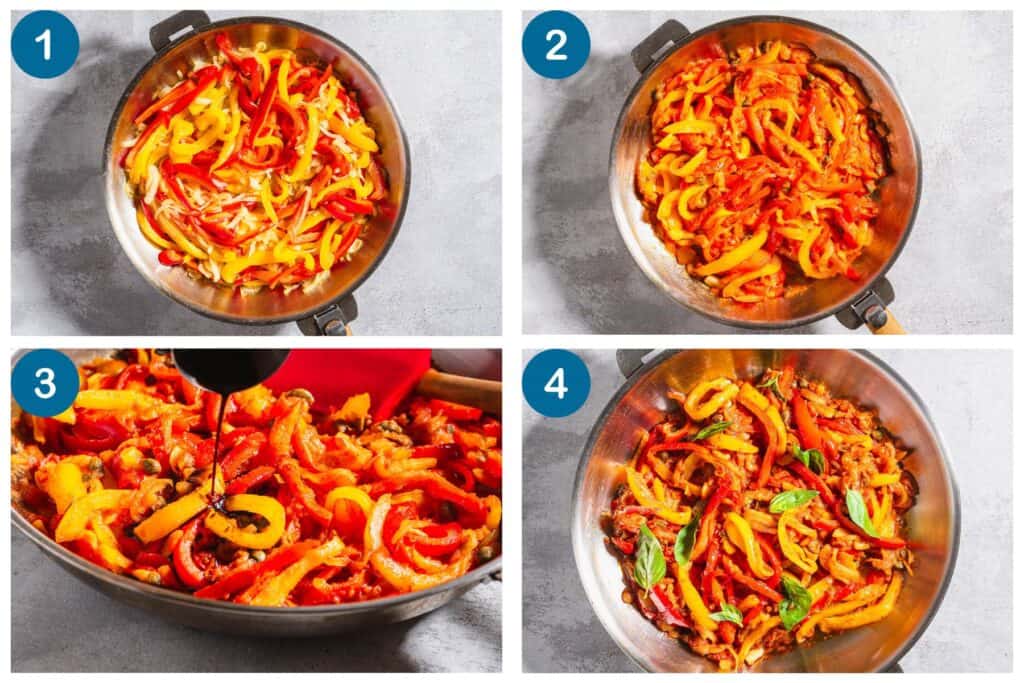
Prep and Soften the Vegetables
- Prep your vegetables. Remove the stems from 2 pounds of sweet bell peppers. Cut them in half lengthwise and remove the seeds and any white parts. Cut the peppers lengthwise into slices slightly thinner than 1/2 inch. Slice 1 yellow onion into thin half-moon slices. Remove stems from the fennel, quarter the bulb and cut into thin strips. Lightly crush and peel 2 garlic cloves.
- Soften the vegetables. Add a 1/4 cup olive oil to a cold skillet. Add peppers, onions, fennel, and garlic, and set the heat to medium. Stir to coat the vegetables with the oil. Heat the vegetables slowly over 10-minutes, until they simmer gently. Season with a pinch of salt and simmer for another 10 minutes, until the vegetables have softened. Reduce the heat to medium-low if necessary to prevent the onions or peppers from scorching.
- Add 1 cup tomato sauce and 1 tablespoon of capers. Stir to incorporate them into the peperonata, and cook for 10 minutes, until the sauce is reduced, and all the vegetables are silky and tender.
- Season. Increase heat to medium-high and add 2 tablespoons of balsamic vinegar. Let it simmer for 1 minute; then lower the heat and cook gently for another 2 to 3 minutes. Remove the pan from the heat.
- Finish and serve. Stir 1/4 cup of torn fresh basil and mint leaves into the peperonata. Let the stew sit for about 10 minutes before serving for the flavors to marry. Peperonata can be served warm, room temperature, or cold.
Can You Make Peperonata Ahead of Time?
Yes! Peperonata is a great make-ahead recipe. The longer the peppers sit, the more the flavors combine and deepen. Plut, peperonata can be served warm, at room temperature, or cold, depending upon how you want to enjoy it.
To store: Keep peperonata in a sealed container in the refrigerator for up to 5 days.
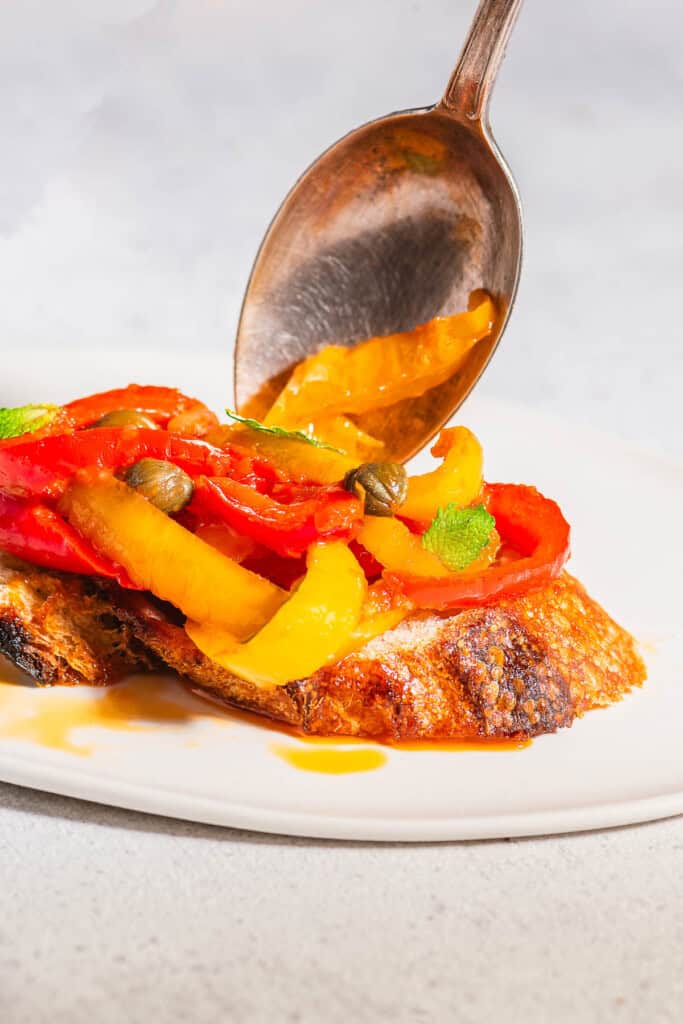
What to Serve with Peperonata
This peperonata recipe is so versatile that you’re really only limited by your imagination. Here are some of my favorite ways to enjoy it:
- With fish: Try it with Pesto Salmon with a Breadcrumb Crust, Shrimp Scampi, or Baked Fish with Garlic and Basil.
- With meat: Beef Tagliata or Pan-Seared Lamb Chops.
- With eggs: Fried eggs, frittatas, or this potato omelet.
- Topping for bruschetta or crostini. Chop the peperonata into confetti-sized dice and spoon it on top of grilled bread, fougasse, or crostini made with crusty olive bread. Drizzle with good olive oil.
- Pizza. Make this homemade Neopolitan pizza crust and top it with peperonata; it goes perfectly with oozy mozzarella cheese. It is one of my favorite pizza toppings.
- Pasta. Spoon chopped peperonata over the pasta, add some freshly grated Parmigiano cheese and a splash of cooking water to loosen things up a bit, and toss well. This preparation goes especially well with short, sturdy pasta shapes, such as paccheri or rigatoni, but you could also make your own homemade pasta noodles.
- Polenta is a great gluten-free option to serve as a base for peperonata.
More Italian Side Dishes
-
Gently cook the vegetables. Pour the oil into a large skillet or heavy-bottomed sauté pan. Add the onion, fennel, peppers, and garlic and turn the heat on to medium. Stir to coat the vegetables with the oil and sauté for 10 minutes, tossing often to prevent burning. Season with 1 teaspoon salt and cover partially. Cook for another 10 to 15 minutes, stirring frequently, until the vegetables have softened but still have a bit of firmness to them.
-
Add the tomatoes and capers. Stir in the tomato sauce and sprinkle in the capers. Cook, uncovered, for about 10 minutes, until the sauce is reduced, and the vegetables are nicely coated, tender, and shiny.
-
Finish. Raise the heat to medium-high and stir in the balsamic vinegar. Cook at a lively simmer for 1 minute; then lower the heat to medium-low and cook another couple of minutes. Taste and add more salt if needed. Remove from the heat and stir in the basil and mint. Let the peperonata sit for about 10 minutes. Discard out the garlic, then finish with a drizzle of olive oil.
Calories: 150.1kcalCarbohydrates: 16.3gProtein: 2.8gFat: 9.7gSaturated Fat: 1.4gPolyunsaturated Fat: 1.3gMonounsaturated Fat: 6.6gSodium: 257.9mgPotassium: 636.1mgFiber: 5.4gSugar: 10.1gVitamin A: 5018.1IUVitamin C: 203mgCalcium: 43.8mgIron: 1.5mg
Bundle and Save!
Four of our best-selling signature olive oils—perfect for everyday use.