
Koulourakia are classic Greek Easter cookies known for their buttery, crispy texture, their distinctive handmade shapes, and aromatic notes of orange and vanilla.
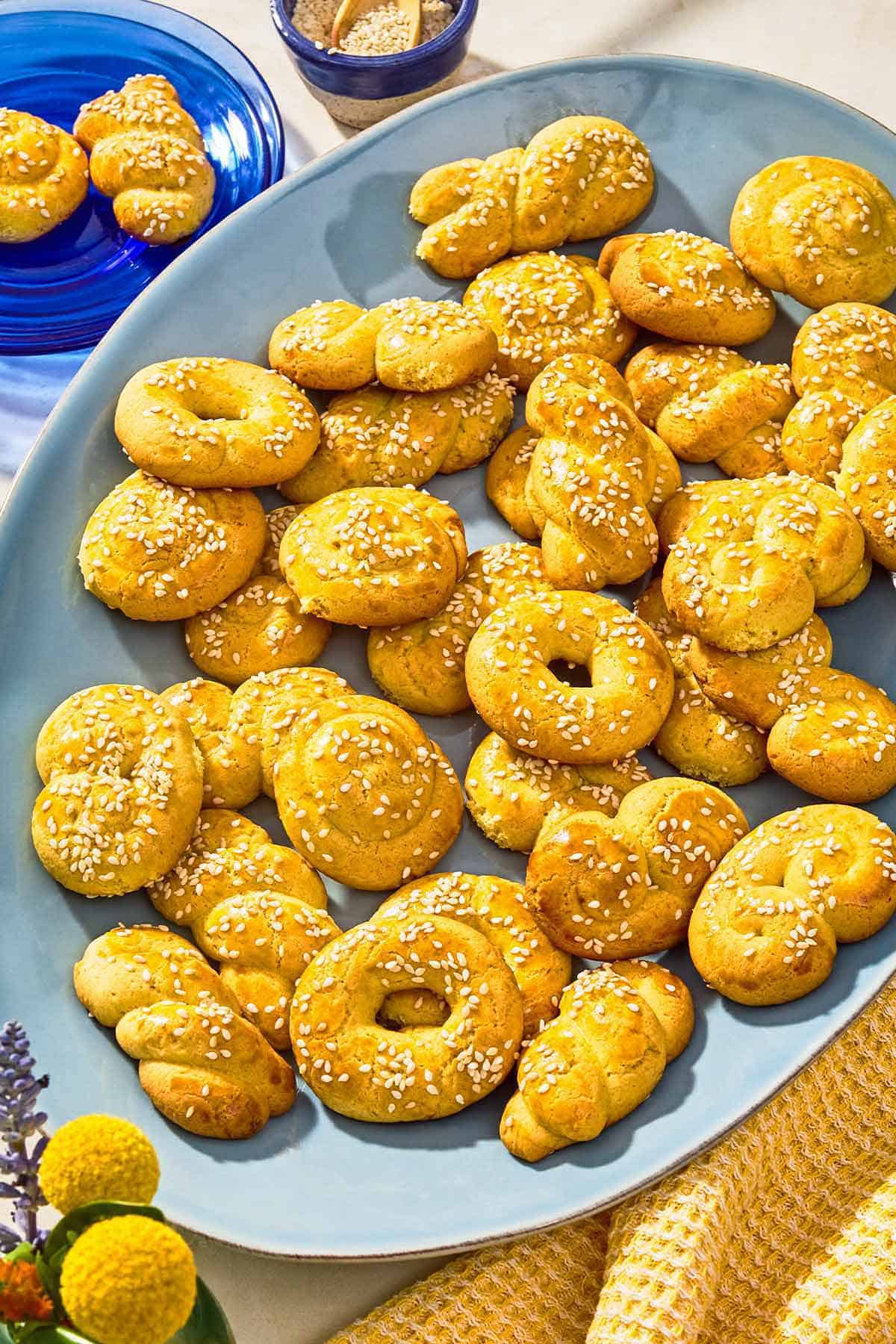
The Cookie Every Greek Child Learns to Make First
Making koulourakia (pronounced kou-lou-ra-kya) is more than just baking cookies. It is a time to connect with family and celebrate our heritage. I remember, as a young girl, gathering with my aunties and mother to make koulourakia by the hundreds during Easter week. Yes, many to enjoy at home, and many to gift to friends. The gesture of sharing ‘the same cookies’ is quite funny, but it expresses hospitality, especially since they are homemade.
It was, and still is, a time to bond, create memories, and pass on the tradition to future generations. The braided shapes, each carefully rolled and twisted by hand, symbolize faith and the lasting bonds of family. This was the first cookie I learned to make as a child, which shows how easy these cookies are to make. We learned to sing a nursery song about making them. It is such a catchy tune that I am sure every Greek child knows it.
“I roll and shape koulourakia, with my two little hands. As they bake, the house smells. I take them to school, we enjoy them with others, all spiced with orange and vanilla. I run outside and share them with others!”
The traditional recipe for Koulourakia is most often butter-based. However, with a mother from southern Greece who taught me that adding extra virgin olive oil to nearly everything is better, I combine them. I think these are more flavorful, with a more balanced texture (not as crumbly as the all-butter version). So it’s a win-win: adding a good fat without compromising on an amazing cookie!
Why You’ll Love This Greek Koulourakia Recipe
- Who doesn’t enjoy cookies? This cookie recipe is lightly sweetened, simple to prepare, bursting with citrus and vanilla aromas, and coated in nutty sesame seeds.
- It has extra virgin olive oil, which boosts flavor and offers nutritional advantages, making these cookies both tasty and more nutritious.
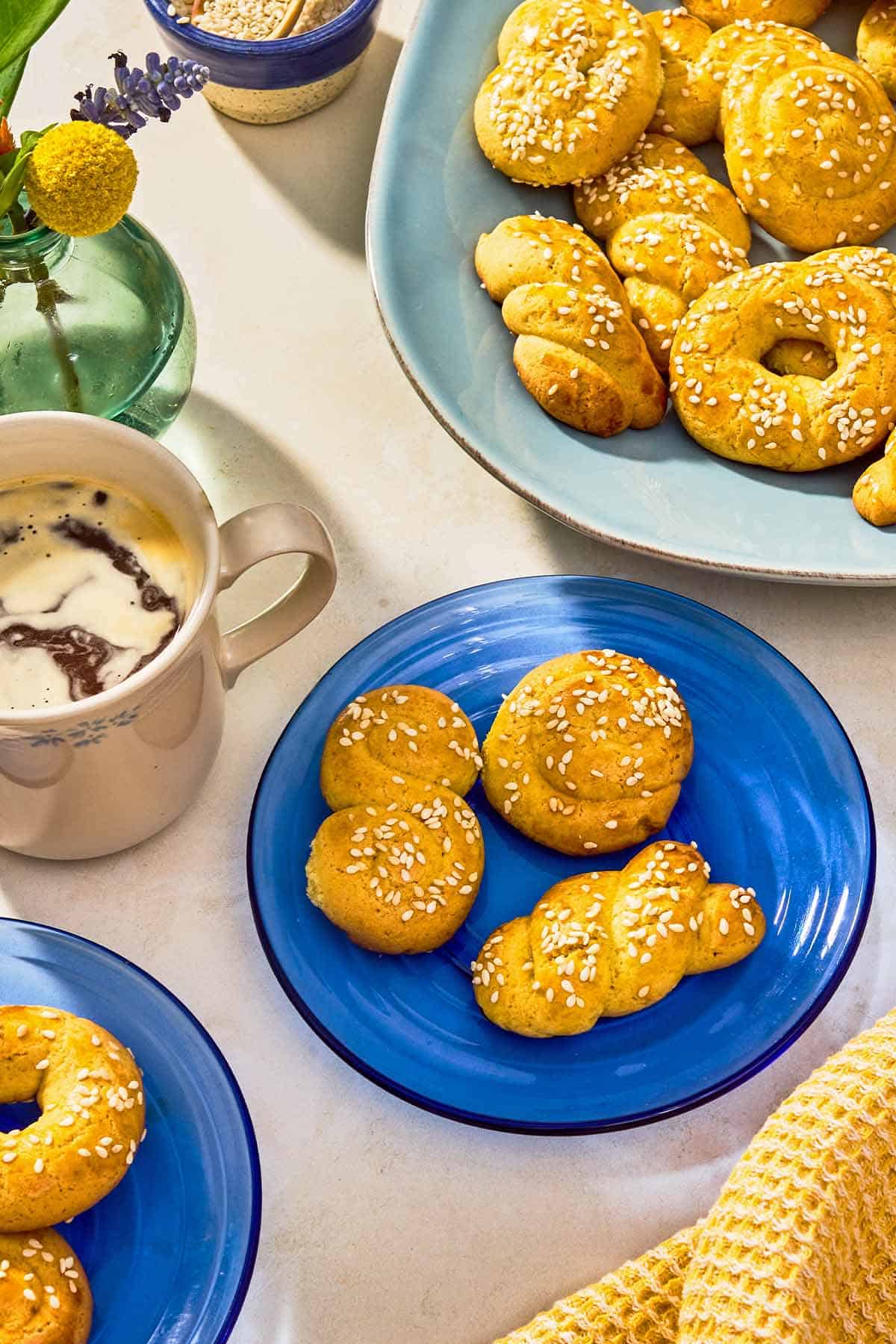
- They’re perfect for dipping into coffee or milk and make a delightful addition to children’s lunchboxes or morning tea breaks at work.
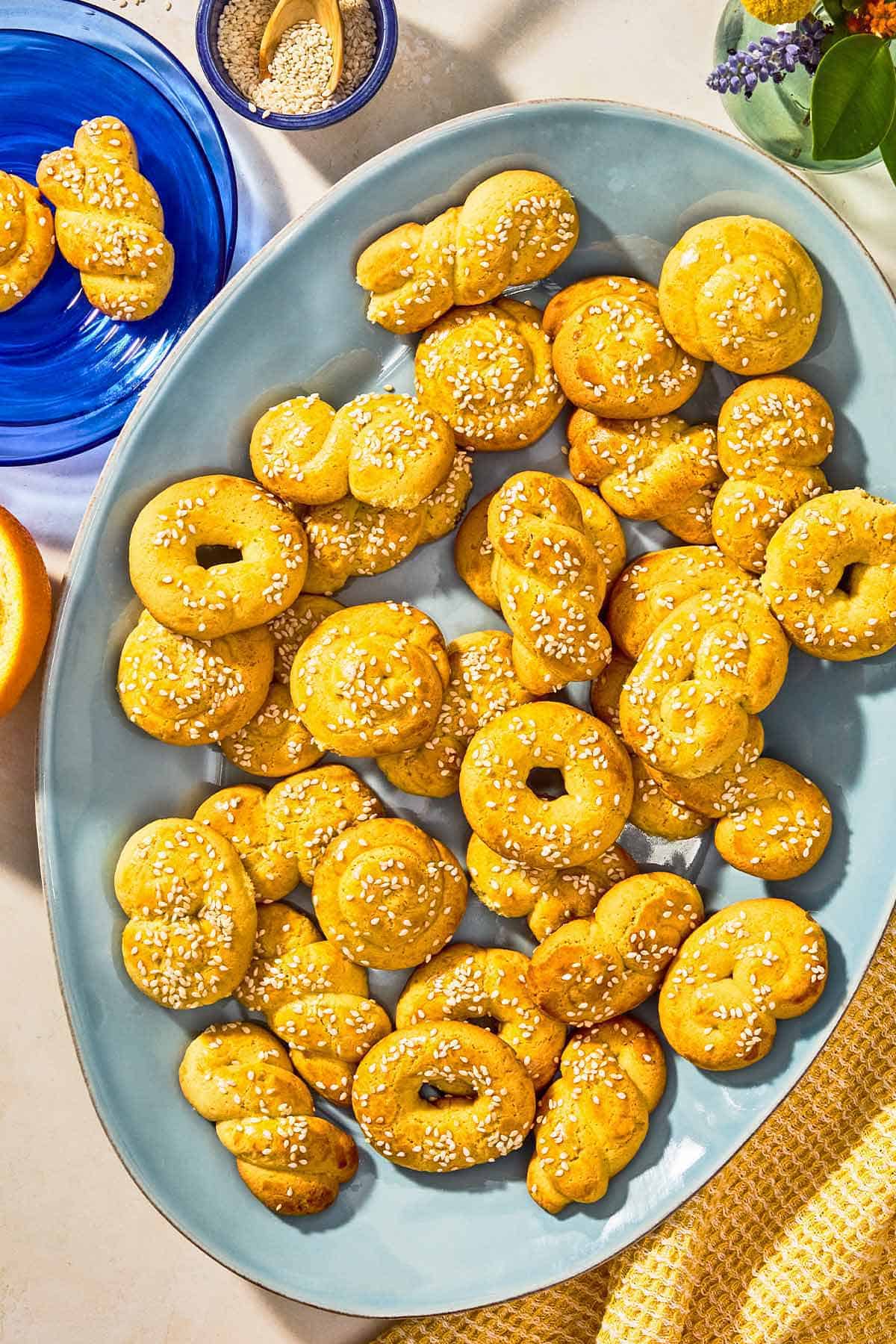
Key Ingredients
- Butter: I prefer unsalted butter. Let it come to room temperature to facilitate creaming with the sugar and to incorporate air, which makes the cookies lighter. The butter provides a rich, slightly nutty flavor.
- Extra virgin olive oil: I always use a full-bodied oil because I enjoy its slightly fruity, complex flavor. It is also a heart-healthy fat. Adding olive oil improves the texture of the cookie, giving it a slight crispness.
- Oranges provide the key flavor for these Easter cookies. I prefer to freshly squeeze my oranges for the best flavor and freshness. I also include the zest, but be careful not to include the white pith, as it is bitter.
- Granulated sugar gives just enough sweetness; these particular cookies are not overly sweet. I use white sugar because I find it milder in flavor, and it dissolves easily.
- Baking soda and baking powder improve the rise and texture of the cookie, making it lighter and crisper.
- Egg provides structure and richness to the dough. Without the egg proteins, the cookie would be more crumbly. I also brush the cookies with an egg wash of milk and egg to give them a little shine.
- Vanilla adds a slight sweetness and beautiful flavor.
- All-purpose flour has a moderate protein content, making it ideal for baking. The flour does not need to be sifted.
- Sesame: I like to add some sesame seeds to my cookies for flavor and texture, though it is totally optional. They are also just as delicious without them.
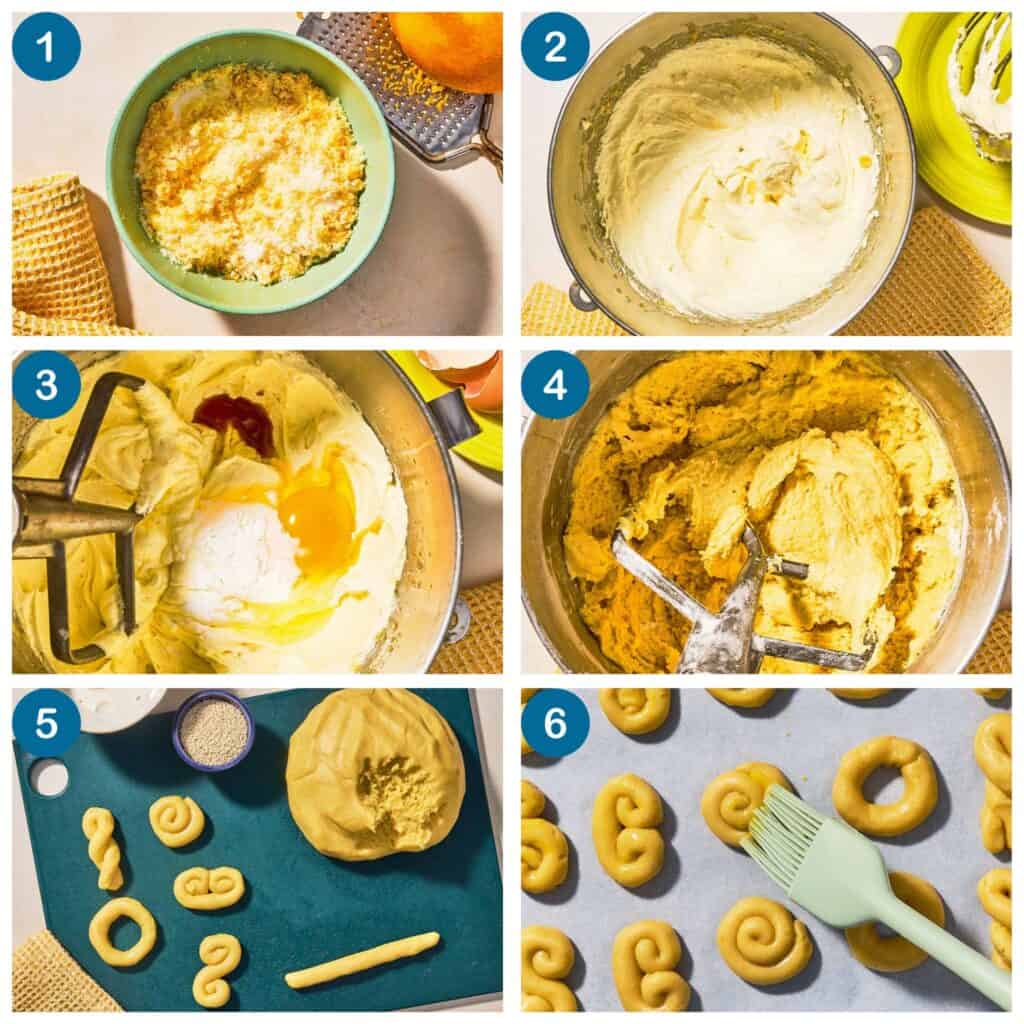
How to Make Koulourakia (Greek Easter Cookies)
To make these cookies, ensure all ingredients are at room temperature. Measure, mix, shape, and bake as follows:
- Get ready. Preheat oven to 350°F. Combine 1 cup sugar (200g) and the zest of 1 orange, then rub them together with your fingers to infuse the sugar with citrus flavor.
- Cream the butter and oil. Using a stand mixer with a whisk attachment, cream together 1/2 cup room-temperature unsalted butter (1 stick, 113g), orange sugar mixture, and 1/3 cup extra virgin olive oil (87ml) until white and doubled in size. This should take about 8 to 10 minutes. This step is crucial to incorporate air, making the cookies light in texture. Do not rush it. When done, swap the whisk for the paddle attachment.
- Make the batter. Stir together 1/2 cup freshly squeezed orange juice (100ml) and 1/2 teaspoon baking soda (it will bubble and fizz), then add to the butter-oil mixture on medium speed. Now add 1/2 teaspoon baking powder, 1 egg, and 1 teaspoon vanilla extract. The mixture will appear slightly curdled at this point. Don’t panic; it will be fine once the flour is added.
- Add the flour. On low speed, gradually incorporate 3 3/4 cups all-purpose flour (450g), a little at a time. Do not add all the flour at once, as you may not need it all. Once the mixture is a soft, pliable (not sticky) dough, stop adding flour.
- Shape the cookies. Line 3 rimmed baking sheets with parchment paper. Do not flour the work surface; additional flour will toughen the cookies. Place the dough on a clean work surface, knead it until it comes together, and form a ball. Pinch off enough dough to form a ball the size of a whole walnut (approximately 20g). Roll the ball into a long rope (length 17cm / 6.7 in). Fold in half and twist together to form the traditional twist shape (see notes for more shape instructions). Place onto the prepared baking sheet 2 inches apart. Cover the ball of dough while you shape each cookie.
- Egg wash the cookies. In a small bowl, beat together 1 egg and 1 tablespoon milk. Brush over the cookies using a pastry brush. Sprinkle the cookies with sesame seeds, if you like.
- Bake for 15 to 20 minutes or until slightly colored. Do not overbake as they will continue to harden as they cool. You will know they are ready when the sides and bottom of the cookies are lightly golden
- Cool. Remove from the oven and allow to cool on the baking sheet for 10 minutes, then transfer to a wire rack to cool completely.
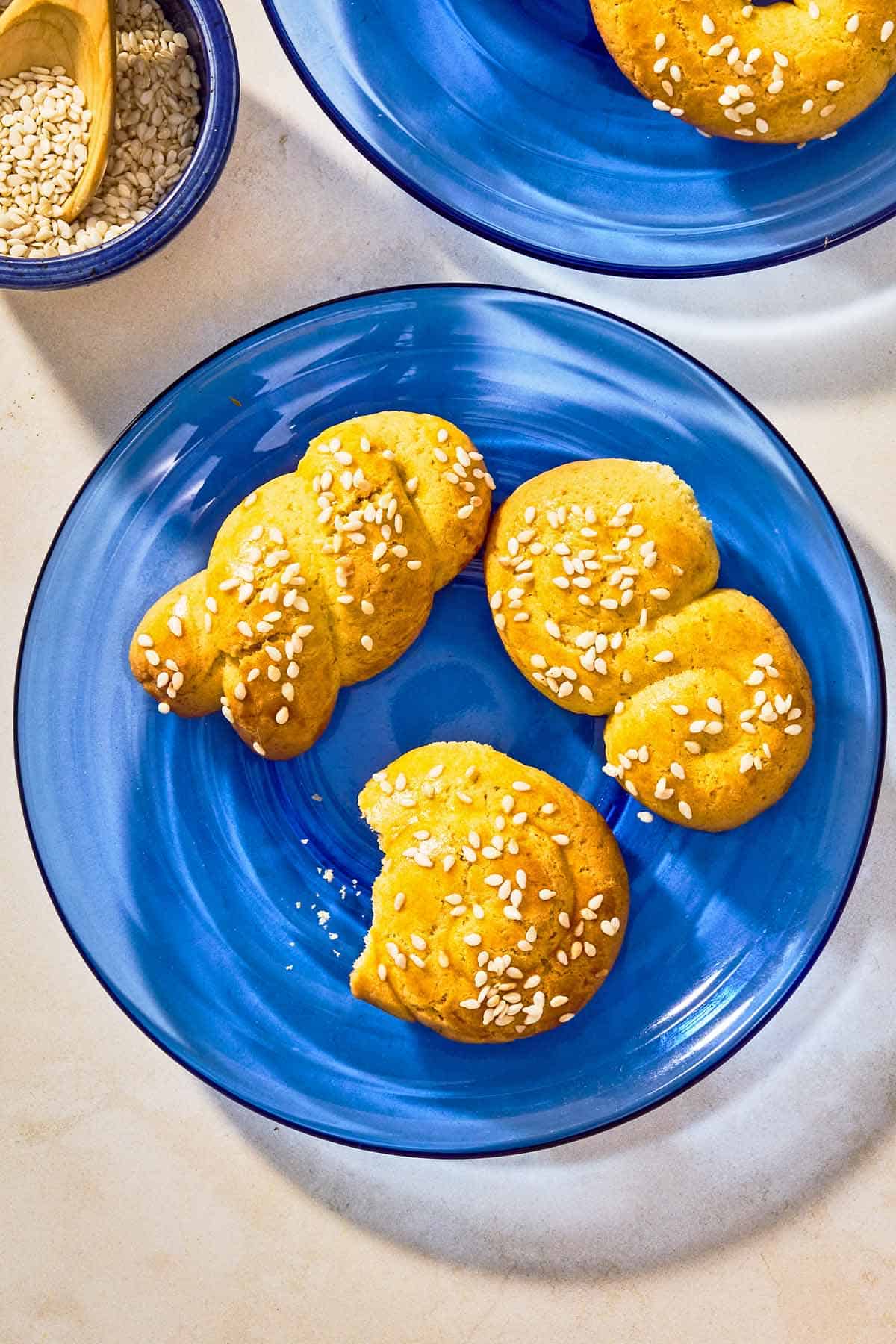
How to Shape Koulourakia (Greek Easter Cookies)
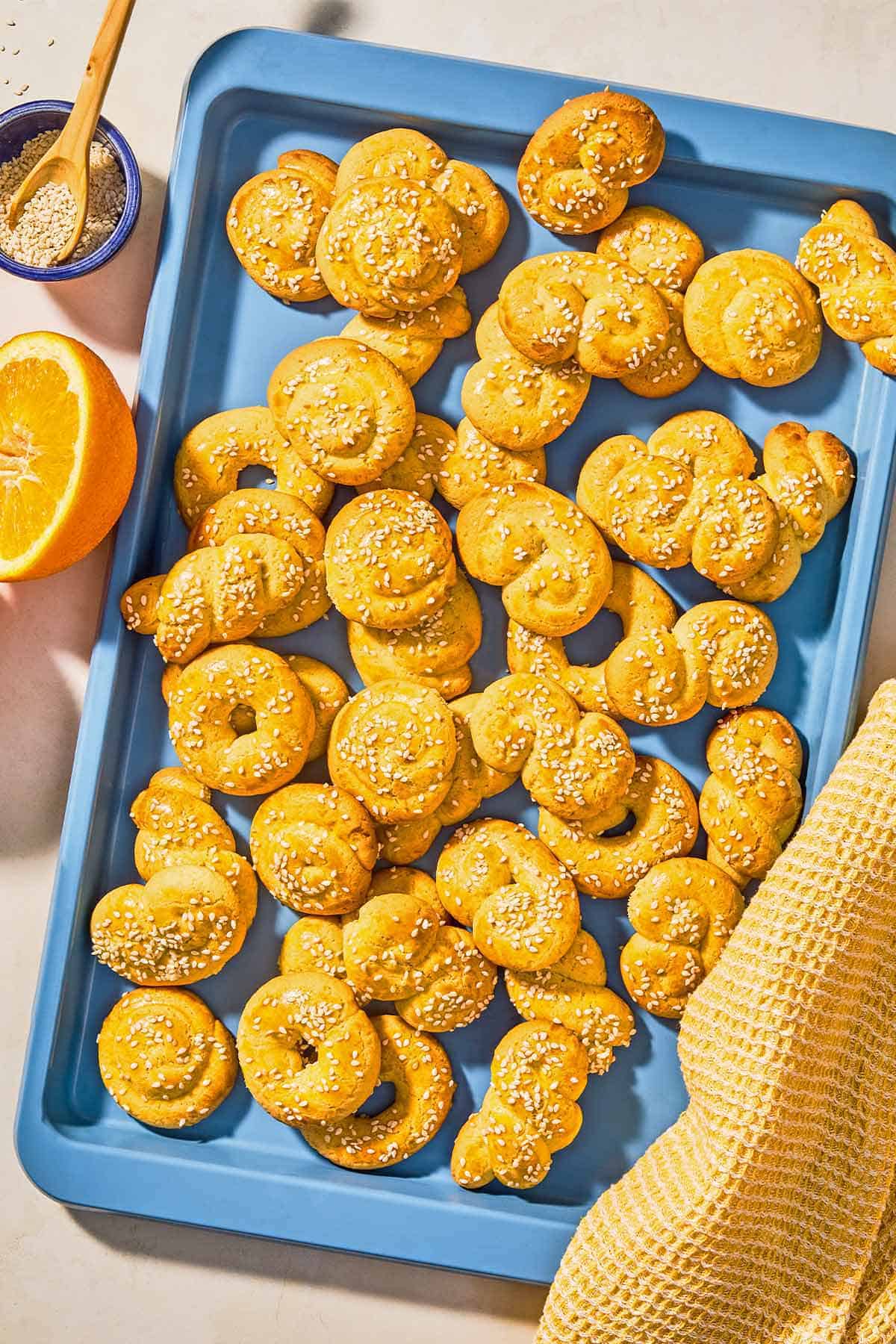
For all the shapes, start by taking a piece of dough weighing approximately 20g. Roll it into a long rope (17 cm / 6.7 in), then shape as desired. The most common shapes are:
- Opposite Spirals: To create opposite spirals, roll a piece of dough into a long rope, then shape each end into a spiral, turning in opposite directions like an S shape.
- Twists: are the most common and simplest shape to make. Roll a piece of dough into a long rope, fold it in half, hold one end, and then twist the two ends together to form the twist.
- Rings: Roll a piece of dough into a rope, then form a circle joining the ends.
- Double Snail: Roll a piece of dough into a rope, then string both ends inwards.
- Spiral: Roll a piece of dough into a rope, then string into a spiral.
Expert Tips for Perfect Koulourakia
- The butter, olive oil, and sugar must be beaten until light and fluffy. Do not rush this step. This is what gives the cookie its amazing texture.
- Keep the dough covered as you shape each cookie. This prevents it from drying out.
- Do not overbake. Keep a close eye on them as they can burn very quickly. Cookies are ready when they are slightly golden underneath and pale on top. They will feel slightly soft on top, but they will continue to harden once baked.
- For best results, use room temperature eggs and butter.
- Use a stand mixer. It’s the easiest way to make these cookies.
- Do not flour your counter when you shape the koulourakia. Additional flour will toughen the cookies.
- Keep the size consistent, so they cook evenly and have a uniform appearance. I like to weigh each one for better precision.
- Do not press down on the ends of the cookie when shaping them. You want the same thickness on all sides of the cookie for an even cookie and even texture.
Substitutes
- Use brandy in place of vanilla to give the cookies a little more kick.
- Add lemon zest (additionally, or in place of the orange zest)
- You could add 1 teaspoon of ground cinnamon or a sweet spice blend.
- You can make these without orange juice; instead, use milk.
What to Serve with Koulourakia
Koulourakia are always eaten for dessert after our main Easter meal. Greek Easter always includes lamb (usually a whole lamb on the spit), but roast lamb would be just as delicious. Or if you need the oven space Slow Cooker Lamb also works. Greek lemon potatoes, Greek salad, and, of course, tzatziki are always on the menu.
Following Easter Sunday, most Greek homes have many koulourakia (gifted from friends, or made themselves), so people often eat them with coffee or tea for breakfast, or as a snack. They are typically dipped into the beverage and enjoyed.
5 Greek Desserts to Try Next
- Melomakarona (Greek Honey Cookies)
- Rizogalo Greek Rice Pudding with Orange and Cinnamon
- Kourabiedes (Greek Almond Cookies)
- Portokalopita (Greek Orange Cake)
- Pasteli (Greek Sesame Honey Candy)
Koulourakia (Greek Easter Cookies)
#wprm-recipe-user-rating-2 .wprm-rating-star.wprm-rating-star-full svg * { fill: #343434; }#wprm-recipe-user-rating-2 .wprm-rating-star.wprm-rating-star-33 svg * { fill: url(#wprm-recipe-user-rating-2-33); }#wprm-recipe-user-rating-2 .wprm-rating-star.wprm-rating-star-50 svg * { fill: url(#wprm-recipe-user-rating-2-50); }#wprm-recipe-user-rating-2 .wprm-rating-star.wprm-rating-star-66 svg * { fill: url(#wprm-recipe-user-rating-2-66); }linearGradient#wprm-recipe-user-rating-2-33 stop { stop-color: #343434; }linearGradient#wprm-recipe-user-rating-2-50 stop { stop-color: #343434; }linearGradient#wprm-recipe-user-rating-2-66 stop { stop-color: #343434; }
Ingredients
- 1 cup (200g) sugar
- Zest of 1 orange
- 1/2 cup unsalted butter, at room temperature (1 stick, 113g)
- 1/3 cup extra virgin olive oil (87ml)
- 1/2 cup freshly squeezed orange juice (100ml)
- 1/2 teaspoon baking soda
- 1/2 teaspoon baking powder
- 2 large eggs
- 1 teaspoon vanilla extract
- 3 3/4 cups all-purpose flour 450 g
- 1 tablespoon whole milk
- Sesame seeds optional
Instructions
-
Rub zest with sugar. Add the sugar to a bowl with the orange zest, then rub them together with your fingers to infuse the flavor.
-
Cream the butter and oil. Using a stand mixer with a whisk attached, cream together the butter, sugar mixture, and olive oil until white and doubled in size. Should take about 8 to 10 minutes. This step is crucial to incorporate air, making the cookies light in texture. Do not hurry this step. When done, remove the whisk and attach the paddle.
-
Make the batter. Stir together the orange juice and baking soda (it will bubble and fizz), then add to the butter-oil mixture on medium speed. Now add the baking powder, 1 egg, and vanilla.The mixture will appear slightly curdled at this point. Don’t panic; it will be fine once the flour is added.
-
Add the flour. On low speed, gradually incorporate the flour, a little at a time. Do not add all the flour at once, as you may not need it all. Once the mixture is a soft, pliable (not sticky) dough, stop adding flour.
-
Shape the cookies. Line 3 rimmed baking sheets with parchment paper. Do not flour the work surface; additional flour will toughen the cookies. Place the dough on a clean work surface, knead it until it comes together, and form a ball. Pinch off enough dough to form a ball the size of a whole walnut (approximately 20g / 0.7 oz.). Roll the ball into a long rope (length 17cm / 6.7 in). Fold in half and twist together to form the traditional twist shape (see notes for more shape instructions). Place onto the prepared baking sheet 2 inches apart to allow room for expansion while cooking. Cover the ball of dough while you shape each cookie.
-
Egg wash the cookies. In a small bowl, combine the remaining egg and milk. Brush over the cookies using a pastry brush. Sprinkle the cookies with sesame seeds.
-
Bake the cookies. Bake for 15 to 20 minutes or until slightly colored. Do not overbake as they will continue to harden as they cool. You will know they are ready when the sides and bottom of the cookies are lightly golden
-
Cool. Remove from the oven and allow to cool on the baking sheet for 10 minutes, then transfer to a wire rack to cool completely.
Notes
- Shop this recipe: Visit our shop to browse quality Mediterranean ingredients, including the olive oil and spices used in this recipe.
-
How to Shape Koulourakia: For all the shapes, start by taking a piece of dough weighing approximately 20 g / 0.7 oz. Roll it into a long rope (17 cm / 6.7 in), then shape as desired. The most common shapes are:
- Opposite Spirals: To create opposite spirals, roll a piece of dough into a long rope, then shape each end into a spiral, turning in opposite directions.
- Twists: are the most common and simplest shape to make. Roll a piece of dough into a long rope, fold it in half, hold one end, and then twist the two ends together to form the twist.
- Rings: Roll a piece of dough into a rope, then form a circle joining the ends.
- Double Snail: Roll a piece of dough into a rope, then string both ends inwards.
- Spiral: Roll a piece of dough into a rope, then string into a spiral.
- How to Store Koulourakia: Koulourakia are best stored in an airtight container once cooled completely. They can keep for up to 3 weeks. Once cooled, you can also freeze them, but because they’re easy to make I suggest preparing fresh batches whenever you crave them and eating them right away!
Nutrition
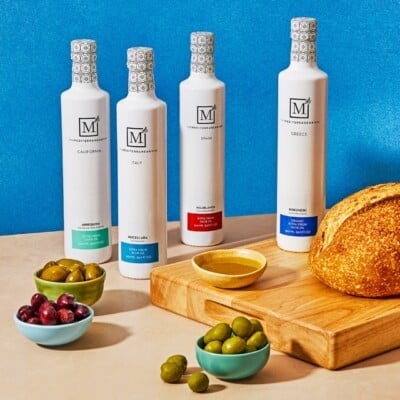
Bundle and Save!
Four of our best-selling signature olive oils, perfect for everyday use.
The post Koulourakia (Greek Easter Cookies) appeared first on The Mediterranean Dish.