
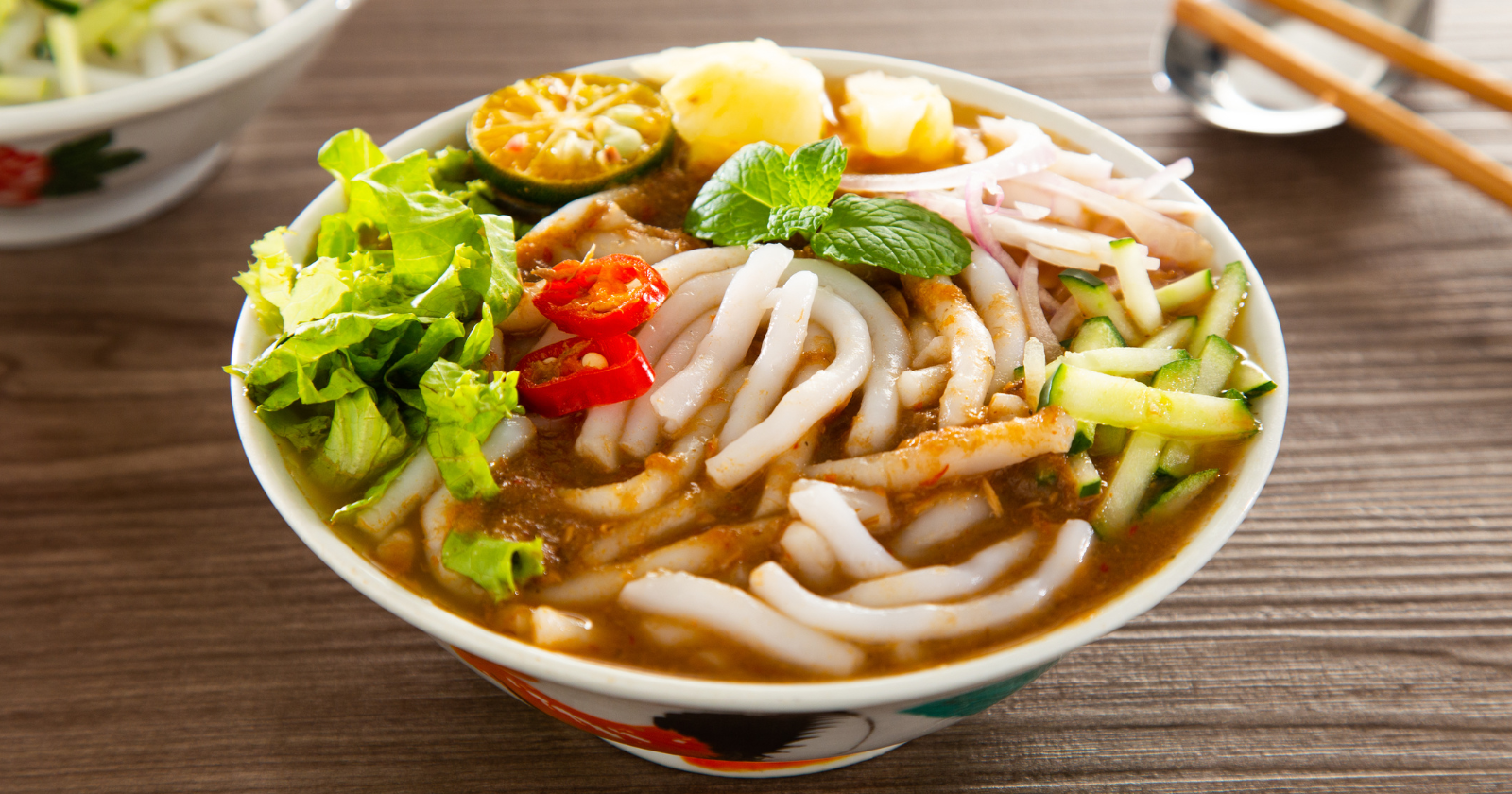
The first time I tried laksa at a hawker center, I nearly cried. Not from the heat (though it was properly spicy), but from the sheer depth of flavor packed into that single bowl. Rich coconut milk swirled with a complex spice paste that hit every note on my palate.
When I got home and tried recreating it without the traditional shrimp paste and fish stock, my first attempts tasted like spicy coconut water with noodles floating in it. Depressing.
Most vegetarian laksa recipes online make the same mistake. They strip out the umami-rich seafood elements and hope coconut milk will somehow carry the whole dish. It won’t. The secret to incredible vegetarian laksa isn’t finding perfect substitutes for fish sauce and shrimp paste. It’s building layers of flavor from multiple sources until your broth becomes so complex that nobody misses the seafood at all.
Why most vegetarian laksa fails (and how to fix it)
Traditional laksa gets its punch from belacan (shrimp paste) and dried shrimp. These ingredients don’t just add saltiness. They bring a funky, fermented depth that makes the difference between a good laksa and one that haunts your dreams.
Here’s where most recipes go wrong: they try to replace these elements one-for-one. A tablespoon of soy sauce for fish sauce. Some salt for the shrimp paste. This approach guarantees disappointment.
Instead, think about building umami from multiple angles. Dried shiitake mushrooms, when soaked and blended into your spice paste, create an earthy backbone. A spoonful of white miso adds that fermented complexity. Tamarind brings the sour note that usually comes from preserved ingredients. Dark soy sauce contributes color and a subtle sweetness.
The mental shift here mirrors something bigger about cooking and life. Stop looking for perfect replacements. Start understanding what each ingredient actually does, then achieve that same effect through different means. It’s the same principle I apply when adapting to new situations.
Rather than trying to recreate exactly what worked before, I identify what I actually need and find fresh ways to get there.
Building your spice paste foundation
The spice paste (rempah) is where your laksa lives or dies. This isn’t the place to be timid or take shortcuts. Yes, you could use store-bought laksa paste, but you’d miss the meditation of grinding spices, the way your kitchen fills with the smell of toasting coriander seeds, the satisfaction of creating something profound from simple ingredients.
Start with dried chilies. I use a mix of mild and hot varieties, about 8-10 total, soaked in hot water until soft. While those soak, toast your dry spices in a pan: 2 tablespoons coriander seeds, 1 teaspoon cumin, 1/2 teaspoon turmeric powder. The moment they release their aroma, they’re ready.
For the fresh elements: 4 shallots, 6 cloves garlic, a thumb-sized piece of galangal (or ginger if you can’t find galangal), 2 stalks lemongrass (just the tender bottom part), and 5 candlenuts or macadamia nuts for creaminess. Here’s my game-changer: add 3 soaked dried shiitake mushrooms to this mix.
Blend everything with a splash of the mushroom soaking liquid until you have a smooth paste. This takes patience. Your blender will struggle. You’ll need to stop and scrape down the sides repeatedly. Consider it a practice in persistence. Some of the best things in cooking and in life require pushing through the moment when it seems like it’s not working.
The 30-minute timeline that actually works
Most “30-minute” recipes lie to you. They don’t count prep time or assume you have the knife skills of a sushi chef. This timeline is real, tested in my cramped apartment kitchen while fielding texts about weekend plans.
Minutes 0-5: Get your dried chilies soaking. Start heating water for noodles. Toast your spices.
Minutes 5-10: Rough chop all your aromatics. Don’t aim for perfection. They’re getting blended anyway. Drain your chilies.
Minutes 10-15: Blend your spice paste. While the blender runs, prep your toppings: slice cucumber, fry tofu cubes, boil eggs if using.
Minutes 15-20: Cook your paste. This is crucial. Heat oil in your pot and fry that paste for a full 5 minutes, stirring constantly. It should darken and smell incredible. The raw edge disappears, replaced by something deeper.
Minutes 20-25: Add your liquids. One can of full-fat coconut milk, 3 cups vegetable stock, 1 tablespoon tamarind paste, 1 tablespoon white miso, 2 tablespoons dark soy sauce. Simmer while you cook your noodles according to package directions.
Minutes 25-30: Final seasoning with salt and palm sugar or brown sugar. Assemble your bowls: noodles, ladle over the broth, top with your prepared garnishes.
Secret weapons from my kitchen experiments
After years of tweaking this recipe, I’ve discovered a few non-traditional additions that elevate the dish beyond standard vegetarian versions.
Roasted tomato paste. Just a tablespoon, added with your spice paste, brings umami and a subtle sweetness that rounds out the flavors. I discovered this during a particularly experimental evening when my usual ingredients were running low.
Nutritional yeast. Two tablespoons stirred in at the end add a savory depth without making it taste cheesy. My friends who eat meat swear this version tastes more authentic than some traditional versions they’ve tried.
Black sesame oil. A tiny drizzle in each bowl before serving adds a mysterious depth. Not enough to identify it as sesame, just enough to make people wonder what that amazing flavor is.
Growing herbs on my balcony has taught me that fresh garnishes transform good dishes into memorable ones. A handful of fresh mint, Thai basil, and cilantro on top isn’t optional. They’re essential. The bright, fresh herbs cut through the rich broth and make each spoonful feel new.
Making it your own
The beauty of mastering a base recipe is that you can then adjust it to match your mood or what’s in your fridge. Sometimes I add roasted kabocha squash for sweetness and substance. Other times, I’ll throw in some fresh green beans for crunch.
On particularly cold evenings, I increase the chilies and add extra ginger to the paste. When friends come over, I set up a garnish station and let everyone customize their bowl. It becomes an interactive experience rather than just dinner.
This flexibility matters beyond the kitchen too. Once you understand the core principles of something, whether it’s laksa or a new skill you’re developing, you can adapt and improvise with confidence. You’re not following a rigid recipe anymore. You’re creating something uniquely yours while honoring the essence of the original.
Final thoughts on finding the real thing
“Authentic” is a loaded word in cooking. After traveling through Southeast Asia and tasting dozens of different laksas, I learned that there’s no single “real” version. Each region, each family, each cook brings their own interpretation.
What makes this vegetarian laksa taste “real” isn’t about perfectly mimicking traditional recipes. It’s about understanding what makes laksa satisfying: the interplay of rich and fresh, spicy and cooling, complex and clean. When you nail those contrasts, when your spice paste is properly cooked and your garnishes are generous, you create something that honors the spirit of the dish while making it your own.
The next time you crave laksa, don’t settle for takeout or assume you need seafood to make it work. Grab your blender, toast those spices, and trust the process. In 30 minutes, you’ll have something that would make that hawker proud. More importantly, you’ll have proved to yourself that with the right approach, plant-based versions of beloved dishes can be every bit as satisfying as their traditional counterparts.