
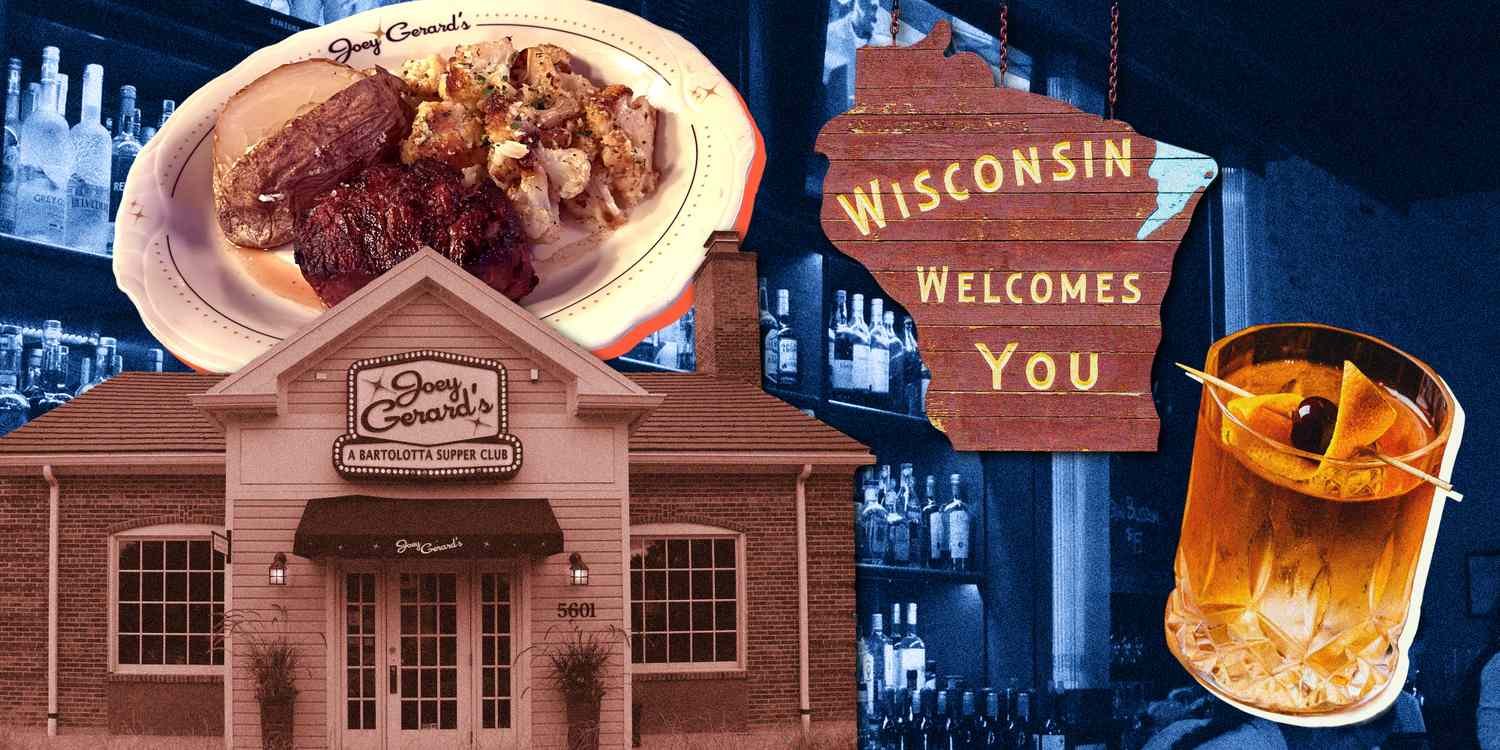
In a world of QR-code menus, open-concept kitchens, and 30-minute dining windows, Wisconsin’s supper clubs insist on slowing everything down. Dinner here is a ritual, not a reservation—a two-hour conversation that begins with a relish tray and ends with an ice cream cocktail.
Supper clubs have always been part of my life. As a born-and-raised Wisconsinite, I remember them fondly as a special treat for my family. Even now, as a Chicagoan, I love going back to my home state to partake in this dining experience. You might be able to take supper club culture out of Wisconsin, but you can’t take Wisconsin out of the supper club.
Essentially a restaurant, yes—but more than that, Wisconsin’s supper clubs are cultural time capsules, preserving a rhythm of dining that’s equal parts meal and memory.
Haggerty Photography
It all starts with a relish tray. Stacked high with celery, cucumbers, carrots, broccoli, and other nibbly foods, it’s a smorgasbord to nibble as you share stories from the week. At Joey Gerard’s, a newer supper club that occupies the former Harmony Inn on Milwaukee’s South Side, the tray comes with a generous heap of black olives.
My Grandma Finn would’ve been proud; she used to eat every olive in sight at our holiday dinners. When I tasted one there recently, the briny flavor flipped a switch in my brain, bringing back her laugh, her bracelets jangling as she reached for “just one more.” That’s the thing about supper clubs: they don’t just feed you, they transport you.
The traditions roll on—cheese and cracker trays, the debate over sweet or dill pickles, fresh rolls that steam when you break them open. Even the word “supper” feels like my grandparents. These places are more than restaurants; they’re recipes for memory.
Haggerty Photography
And in Wisconsin, supper isn’t something you rush. It’s a graceful two- or three-hour dance: bread basket, relish tray, cheese spread, soup, salad, and finally an entrée you’ll barely have room for. Taking my time in Joey Gerard’s, surrounded by vintage photos that honor its past, I’m reminded of Thanksgiving at my grandparents’ house—no one leaves until you physically can’t eat another bite.
If you’ve ever experienced a “Midwest Goodbye,” you already understand the supper club’s spirit. You linger in the doorway, gabbing with your loved ones, unwilling to end the night. That same comfort—that refusal to hurry—carries through every supper club, from getting dolled up for a steak at Tornado Steak House in Madison to soaking in the lakeside glow at The Duck Inn near Delavan, savoring vintage glamour at HobNob in Racine, or settling into the old-school vibes of Digger’s Sting in La Crosse. Even up in Door County, at the convivial Sister Bay Bowl, you’ll find that same unspoken promise: wherever you go, you feel at home. It’s in our DNA.
Eric Phillips
Traditionally Wisconsin
That DNA runs deep, threaded through the state’s origins and landscape, says Ron Faiola, author of The Wisconsin Supper Clubs Story: An Illustrated History with Relish and curator of wisconsinsupperclubs.com. “Supper clubs fit Wisconsin’s identity as a Northwoods recreational destination for hunting, fishing, and boating,” he explains. “There’s always a supper club on a lake or in a remote wooded area near your cabin. They’re gathering places for communities. For those with second homes, that is an important part of living ‘up north.’”
Faiola traces their rise to Prohibition, when Wisconsin’s proximity to Chicagoland bootleggers made it easy to keep the drinks flowing. “From Northwoods moonshiners to imported booze from Canada, the state’s roadhouses and dancehalls were both a source of booze and a conduit for transportation,” he says. “When those became supper clubs, that drinking culture continued to this day. We first sit at the bar and have a drink or two before dining—a key component of supper clubs. We even get the fish drunk before we serve up a beer-battered fish fry.”
Eric Phillips
During the economic upturn after World War II, supper clubs hit their stride. The 1950s and ’60s were the golden age of the supper club, but they’ve endured as so much about American life has disappeared: Wisconsin has more than 250 operating supper clubs, and they’re peppered throughout the state, from historic downtowns and suburban strip malls to remote rural outposts.
Some, like The Fox & Hounds in the small unincorporated town of Hubertus, feel like secret societies. Tucked away from the main road, that supper club, circa 1933, was built around a one-room cabin that dates back to 1845. If you didn’t know it was off Friess Lake Road, you’d easily drive right by it.
In many ways, these restaurants are Wisconsin’s open secrets. As if only people in the know truly appreciate them. Yet, our Midwestern hospitality makes it impossible to keep them an actual secret. For a fan like myself, it seems a shame not to share them with anyone and everyone.
A Sense of Place
Walk into a Wisconsin supper club, and you step into a world that resists expiration. While outsiders might picture dim lounges and plush booths, each club keeps its own version of time. Some freeze it—cabins in the woods lit by neon beer signs from 1963, or midcentury rooms with piano tunes floating through the dark. Others, like Joey Gerard’s, blend the old and new, preserving what can’t be replaced: the feeling.
Taking over the Harmony Inn’s strip-mall location outside Milwaukee, Joey Gerard’s polished the edges but wisely kept the spirit intact. The best keepsakes? The original bathroom tile mosaics of marsh life—a frog leaping, a turtle mid-swim. They’re tiny time capsules, proof that even when supper clubs change, they don’t really change. Time moves differently here: slower, kinder, and with a sense of humor.
Eric Phillips
A Meal to Write Home About
A supper club meal unfolds like a story told slowly. The shrimp cocktail arrives chilled and perfect, but no one rushes to order the steak. You sip, you chat, you wait. There’s comfort in that waiting—in knowing the meal moves at the pace of conversation, not the kitchen clock.
And then there’s the Wisconsin old-fashioned, the state’s unofficial slow sip. Made with brandy instead of whiskey, muddled orange and cherries, a dash of bitters, and topped with a splash of sweet lemon-lime soda, it’s meant to last an entire conversation. It’s not a cocktail you down; it’s one you linger over, letting the ice melt as stories unwind.
Dessert, of course, doesn’t break the rhythm—it extends it. In Wisconsin, we drink our desserts: Brandy Alexanders, Grasshoppers, Pink Squirrels. They’re nostalgic, unabashedly creamy, and perfectly impractical—drinks for people who refuse to rush home. I ordered a Grasshopper at Joey Gerard’s that night, and when the mint hit my tongue, time seemed to stop again, the way it always does in these places.
Welcome Home
By the time I drained the last of my Grasshopper, the dining room had thinned, but no one seemed in a hurry to leave. The waitstaff lingered to chat; strangers exchanged goodnights as if they’d known each other for years.
That’s the real magic of Wisconsin’s supper clubs: They suspend time just long enough for us to recognize ourselves in one another. In a state that measures seasons by fish fries and Friday nights out, these places are less about dining and more about remembering what it feels like to slow down, to stay, to belong.
In a world that can’t stop moving, Wisconsin’s supper clubs still insist on standing still. And thank goodness for that.