
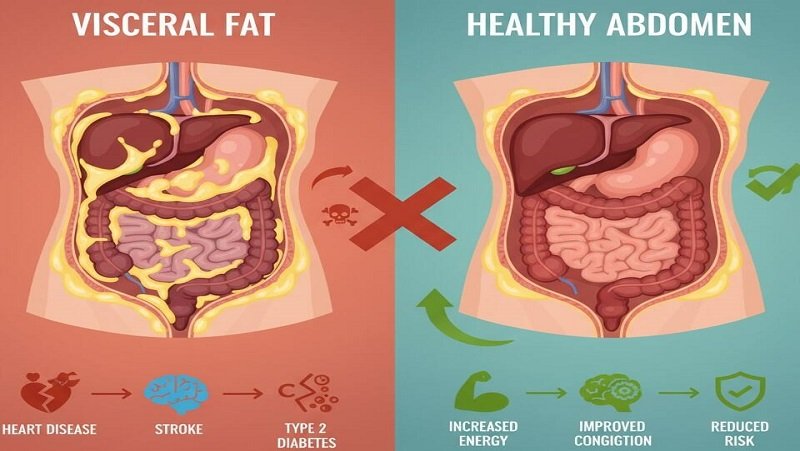
Excess body fat is a cause of concern for most people worldwide, but not all fat is the same. Visceral fat is the most dangerous among the various types of fats as it has a negative impact on our health. Unlike subcutaneous fat, which lies just under the skin, visceral fat surrounds vital organs like the liver, pancreas, and intestines. If the visceral fat is in high quantity, then it can lead to serious health risks such as heart disease, diabetes, and metabolic disorders.
In this blog, we will explore what visceral fat is, its symptoms and causes, the dangers it poses, and different ways to get rid of visceral fat and improve overall well-being.
What is Visceral Fat?
Visceral fat is a type of body fat stored deep within the abdominal cavity, surrounding internal organs. Unlike the fat stored under the skin (subcutaneous fat), visceral fat is more metabolically active. It releases inflammatory compounds that can disrupt normal bodily functions and lead to health conditions such as:
- Heart disease
- Type 2 diabetes
- High blood pressure
- Liver disease
- Hormonal imbalances
- Lower back pain
- Fertility problems
- Osteoarthritis
- Asthma
- Cancer
Now, let’s look at the symptoms and causes behind its accumulation.
How Do I Know If I Have Visceral Fat?
Identifying visceral fat can be challenging since it is stored deep inside the body. However, some indicators can help you determine whether you have high levels of visceral fat:
- Health Symptoms: High blood pressure, insulin resistance, and abnormal cholesterol levels can be signs of excess visceral fat.
- Waist Measurement: A waist circumference over 40 inches (102 cm) for men and 35 inches (88 cm) for women suggests excessive visceral fat.
- Body Shape: People with an “apple-shaped” body, where most fat is concentrated around the abdomen, are more likely to have visceral fat.
- BMI and Body Fat Percentage: While BMI alone is not a definitive indicator, higher body fat percentages increase the risk of visceral fat accumulation.
- Medical Tests: A CT scan or MRI is the most accurate way to measure visceral fat, but these tests are usually not necessary for general assessment.
Causes of Visceral Fat Accumulation
Several factors contribute to the buildup of visceral fat, including:
1. Sedentary Lifestyle
Lack of physical activity is a major cause of visceral fat accumulation. When you don’t burn enough calories, the excess energy gets stored as fat in the abdominal region.
2. Poor Diet
Consuming high-calorie, processed foods and excessive sugars leads to fat accumulation.
3. High-Stress Levels
Chronic stress increases cortisol levels, a hormone that promotes fat storage in the abdominal region. High cortisol levels lead to food cravings, further contributing to visceral fat gain.
4. Lack of Sleep
Poor or insufficient sleep disrupts metabolism and increases hunger hormones, making it harder to control weight and fat distribution.
5. Genetics
Some people are genetically prone to storing fat in the abdominal region. However, lifestyle changes can reduce this risk.
6. Excess Alcohol Consumption
Drinking too much alcohol contributes to weight gain and fat storage around the abdomen, commonly referred to as “beer belly”.
How to Get Rid of Visceral Fat
Losing visceral fat demands a mix of healthy eating, regular exercise, and lifestyle changes. Here are some proven strategies to help you reduce visceral fat.
1. Adopt a Healthy Diet
- Cut Down on Sugary Foods: Limit consumption of sodas, sweets, and processed snacks.
- Eat More Fiber: Eating fiber-rich foods like vegetables, whole grains, and legumes help in digestion and keep you full for longer.
- Increase Protein Intake: Protein helps in muscle building and metabolism regulation.
- Choose Healthy Fats: Replace trans fats with healthy fats found in nuts, seeds, avocados, and olive oil.
2. Engage in Regular Exercise
- Cardio Workouts: Running, cycling, and swimming help burn calories and reduce belly fat.
- Strength Training: Lifting weights helps build muscle, which improves metabolism and aids fat loss.
- High-Intensity Interval Training (HIIT): Short bursts of intense exercises followed by rest periods are highly effective in burning excess visceral fat.
3. Manage Stress Effectively
- Meditation and Yoga: These activities reduce stress levels and prevent cortisol-related fat accumulation.
- Engage in Hobbies: Activities like reading, painting, or listening to music help alleviate stress.
4. Improve Sleep Quality
- Sleep for 7-9 Hours: Good sleep helps regulate hunger hormones and boosts metabolism.
- Follow a Sleep Routine: Going to bed and waking up at the same time daily improves sleep quality.
5. Stay Hydrated
Drinking enough water improves digestion, reduces hunger cravings, and helps your body detoxify.
6. Limit Alcohol Consumption
Reducing alcohol intake helps prevent excess calorie consumption and fat accumulation.
Signs You Are Losing Visceral Fat
It is important to keep a tab on the progress while on your visceral fat loss journey. Here are some signs that indicate your efforts are paying off:
- Increased Energy Levels: Losing visceral fat improves metabolic function, leading to higher energy levels.
- Reduced Waist Circumference: A shrinking waistline indicates a decrease in abdominal fat.
- Better Digestion and Gut Health: A healthier diet and lifestyle contribute to improved digestion.
- Lower Blood Pressure and Cholesterol: Losing visceral fat reduces cardiovascular risks.
Final Thoughts
It is important to understand visceral fat and its dangers to maintain a healthy lifestyle. Excess visceral fat increases the risk of serious health issues. However, with proper diet, exercise, and lifestyle changes, it can be reduced.
By following the above-discussed strategies, you can effectively lose visceral fat and improve your overall health. Stay consistent with healthy habits, and make long-term commitments to a healthier life.
For personalized guidance, consult a board-certified obesity medicine physician like Dr. Mona Lala. Expert weight loss doctors can evaluate your health, identify underlying conditions, and create a customized plan that includes diet, exercise, and possible medical treatments. Their professional expertise can help you achieve sustainable weight loss while prioritizing your health and safety.